



I’ve discovered some game-changing secrets in the world of dog fetch toy wholesale. The industry keeps booming, with numbers like these:
$3.52 billion market size in 2025
$3.79 billion projected for 2026 (7.7% growth)
$5.11 billion by 2030 (7.8% growth)
Let’s dive in!
Key Takeaways
Stay updated on popular dog fetch toy trends. Focus on toys that are durable, safe, and visually appealing to attract customers.
Build strong relationships with suppliers. Use negotiation tactics to secure better prices and exclusive products that set your store apart.
Implement smart inventory management. Analyze sales data to avoid overstock and ensure you stock the right mix of toys for different dog breeds.
Dog Fetch Toy Wholesale Trends
Popular Toy Types
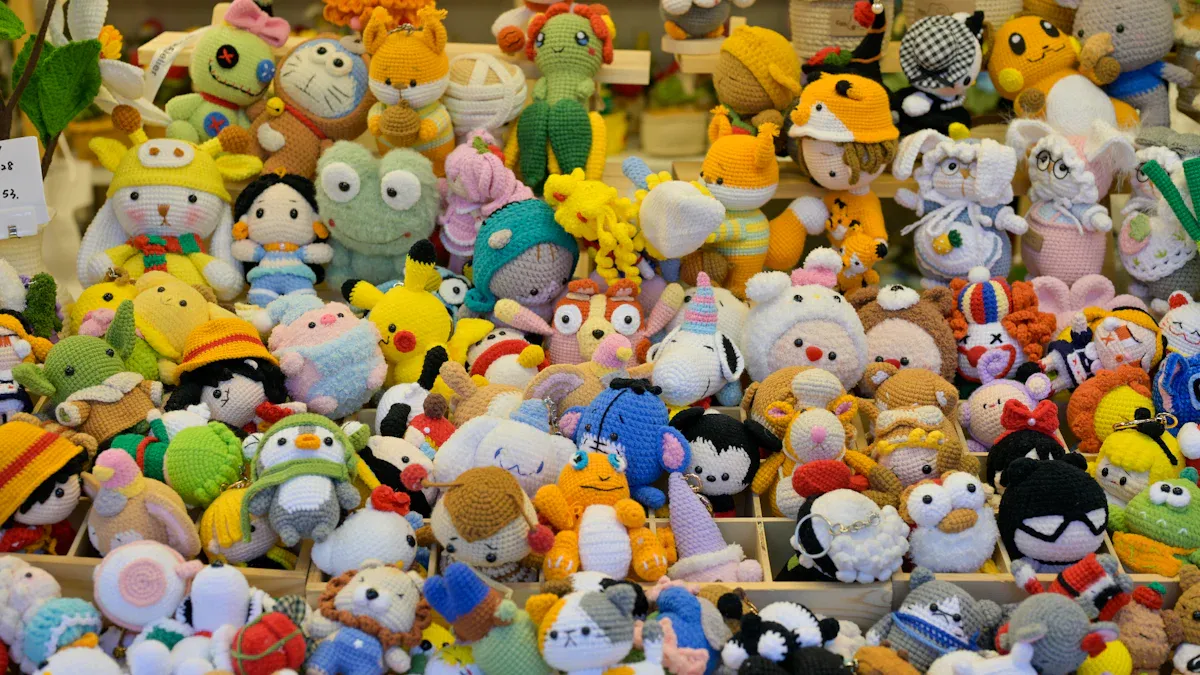
When I look at the dog fetch toy wholesale market, I see a huge variety of toys flying off the shelves. Retailers like Boss PetEdge, Pet Palette Distribution, and Lucky Venus always keep their catalogs fresh with the latest trends. Here’s a quick look at what’s hot right now:
Toy Type | Key Features | Best Breed Match |
|---|---|---|
Squeaker inside, soft texture, fun designs | Small/medium breeds, puppies | |
Rubber Chew Toys | Durable, bouncy, treat slot, non-toxic | Aggressive chewers, large dogs |
Rope Toys | Dental flossing, tug-of-war, easy grip | All sizes, active dogs |
Interactive & Puzzle | Food dispensing, mental stimulation | High-energy, smart breeds |
Treat Dispensing Toys | Holds treats, enrichment focus | All breeds, mentally active |
LED Light-Up Toys | Glow-in-dark, USB rechargeable | All sizes, outdoor-active dogs |
I notice plush and squeaky toys always lead in unit sales. Rubber and TPR chew toys are gaining ground, especially with owners who care about dental health. LED and light-up toys are a hit with city dog owners who walk at night. I also see more silicone dental toys and training combos popping up in the premium segment.
Features That Drive Sales
Certain features make fetch toys stand out in the dog fetch toy wholesale world. I always look for these when choosing what to stock:
Feature | Description |
|---|---|
Lasts through rough play and muddy parks | |
Ease of Use | Easy to throw, ergonomic for owners |
Safety for Dogs’ Mouths | Soft, gentle materials for teeth |
Visibility | Bright colors, easy to spot outdoors |
Versatility | Works in different play environments |
I’ve noticed that customers want toys that last and keep their dogs safe. Bright colors help owners find toys in the grass or at the park. Many buyers also ask for eco-friendly options. The sustainable pet toys market keeps growing, and premium toys with extra features are more popular than ever. If you want to stay ahead in dog fetch toy wholesale, keep an eye on these trends and features.
Sourcing and Suppliers
Where to Find Wholesalers
Finding the right supplier can make or break your success in dog fetch toy wholesale. I always start by checking trusted platforms and directories. These sites connect me with reliable wholesalers and manufacturers from around the world. Here’s a quick look at some of my go-to sources:
Platform | Description |
|---|---|
alibaba.com | A massive international e-commerce platform connecting buyers with wholesale dog toy manufacturers. |
made-in-china.com | A comprehensive B2B platform connecting buyers with Chinese custom dog toy manufacturers. |
dhgate.com | An online marketplace offering a wide range of pet toys at wholesale prices for small and medium businesses. |
globalsources.com | A leading B2B marketplace connecting buyers with verified suppliers, primarily from Asia. |
aliexpress.com | A subsidiary of Alibaba Group catering to smaller orders and individual consumers. |
chinabrands.com | A global drop-shipping and wholesale platform offering a wide range of pet toys at competitive prices. |
I also check out Faire, Great Lakes Wholesale, Pet Palette Distribution, and The Bazaar Inc. These platforms offer a mix of domestic and international options. I like to compare prices, minimum order quantities, and shipping times before making a decision.
Tip: Always read reviews and ratings from other retailers. This helps me avoid suppliers with poor service or low-quality products.
Vetting Supplier Quality
Not every supplier delivers what they promise. I learned this the hard way when I ordered 500 units of a chew toy that looked great in photos. The packaging was perfect, and the toy passed a basic safety check. But soon, customers complained about the toy’s hardness and design flaws. I realized I needed a better system for vetting suppliers.
Now, I use a checklist to evaluate every potential partner:
Criteria | Description |
|---|---|
Product Requirements | I define what my customers need. I consider dog size, age, and play style to avoid mismatches. |
Material Safety and Quality | I ask for up-to-date safety certifications. I want to see proof that the toys are safe and non-toxic. |
Customization and Testing | I request samples and test them with real dogs. I check for durability and engagement. |
Total Cost of Partnership | I calculate the full cost, including shipping, defect rates, and any extra services. |
Reliability and Quality | I look for suppliers who deliver consistent quality and solve problems quickly. |
I never assume one toy fits every dog. I segment my orders by breed, age, and play style. For example, a puppy needs a softer, smaller toy than a large, aggressive chewer. This approach helps me avoid negative reviews and keeps my customers happy.
Here are some common mistakes I see retailers make when sourcing dog fetch toys:
Ordering large quantities based only on photos.
Ignoring the need for segmentation by dog type.
Overlooking the importance of real-world testing.
Focusing only on price, not total value.
Note: Segmentation matters. A toy for a senior dog should feel different from one for a high-energy puppy. I always match the toy’s design to the dog’s needs.
By following these steps, I build strong relationships with suppliers and keep my shelves stocked with toys that sell.
Pricing and Margins
Setting Wholesale Prices
When I first started in the dog fetch toy wholesale business, I quickly realized that pricing isn’t just about picking a number. I have to balance my costs, what my competitors charge, and what my customers are willing to pay. I usually see wholesale prices for fetch toys ranging from $4.50 to $15, especially on platforms like Faire and OllyDog. But how do I decide where my price should land?
Here’s what I focus on when setting my wholesale prices:
Cost Analysis: I always start by adding up every cost—product, shipping, packaging, and even those sneaky fees that pop up. If I skip this step, I risk losing money on every sale.
Value-Based Pricing: Sometimes, a toy with a unique feature or eco-friendly material can command a higher price. I ask myself, “Would I pay more for this if I were the customer?”
Competitor-Based Pricing: I check what other retailers charge for similar toys. If my price is too high, I might lose sales. If it’s too low, I could leave money on the table.
Psychological Pricing Tactics: I love using prices that end in .99 or .95. It sounds silly, but customers really do see $9.99 as much cheaper than $10.
Adapting Pricing for Different Sales Channels: I sometimes adjust my prices for online marketplaces, local pet shops, or pop-up events. Each channel has its own sweet spot.
Tip: I always keep an eye on raw material costs. For example, polymer resin prices can swing by 10–20% each year. If I see a spike, I know it’s time to review my pricing.
Other factors can sneak up on me, too. Compliance certifications can cost thousands, and shipping rates seem to change every month. I build a little cushion into my prices to cover these surprises.
Maximizing Profits
Once I set my prices, I focus on maximizing my profit margins. I want to make sure every sale counts. Here’s a table that shows how much profit I can make on different types of fetch toys:
Product Type | Average Retail Price | Estimated Wholesale Price | Potential Profit Margin |
|---|---|---|---|
Plush Squeaky Toy | $12.00 | $3.50 | 70% |
Rubber Chew Toy | $15.00 | $4.50 | 70% |
Rope Toy (Large) | $18.00 | $5.00 | 72% |
Interactive Puzzle | $25.00 | $8.00 | 68% |
Tennis Ball (Pack) | $8.00 | $2.00 | 75% |
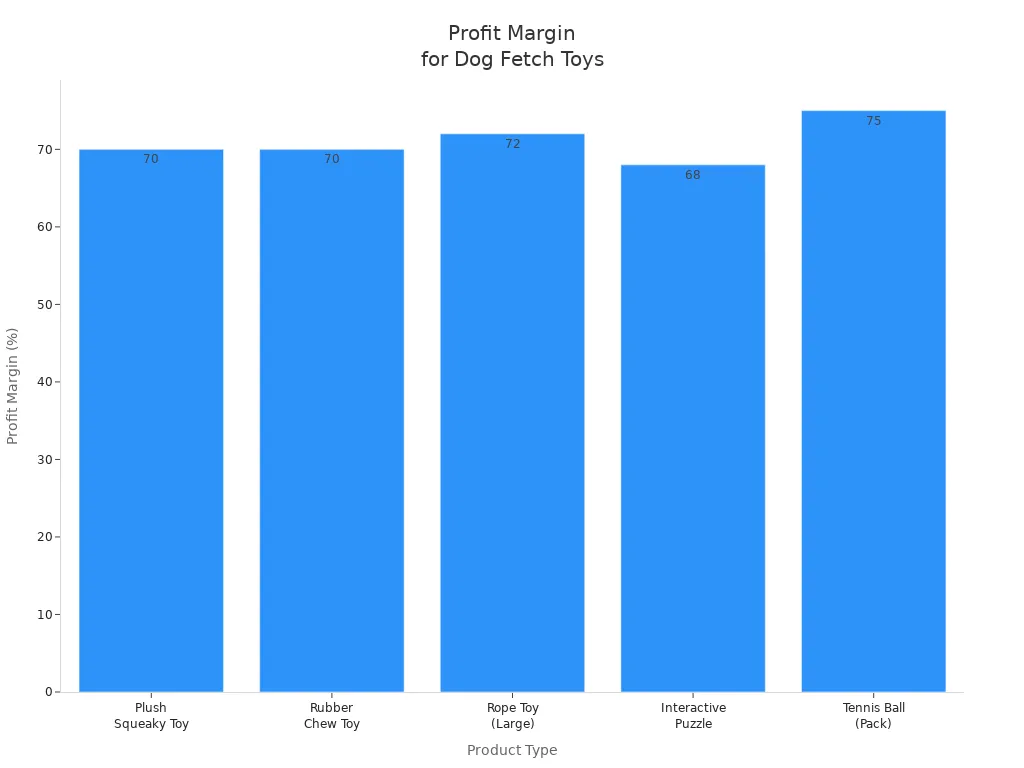
I aim for a margin of at least 65–75%. This gives me room to run promotions or cover unexpected costs. If I see my margins slipping, I dig into my numbers and look for ways to cut costs or raise prices.
Here are my favorite strategies for boosting profits:
Bundle Products: I create bundles, like a rope toy with a tennis ball, and offer a small discount. Customers love deals, and I move more inventory.
Watch Market Demand: If a certain toy is trending, I raise the price a little. When demand drops, I run a sale to clear out stock.
Negotiate with Suppliers: I never accept the first price. I ask for bulk discounts or free shipping, especially if I’m placing a big order.
Monitor Costs Closely: Rising labor costs and shipping fees can eat into my profits. I review my expenses every month and adjust my pricing if needed.
Note: I always remember that the dog fetch toy wholesale market can change fast. If I stay flexible and keep my eye on costs and trends, I can protect my margins and grow my business.
By using these strategies, I keep my prices competitive and my profits healthy. It’s not just about selling more toys—it’s about making every sale count.
Supplier Relationships
Negotiation Tips
Building strong supplier relationships has helped me get better deals and keep my shelves stocked with the best dog fetch toys. I never just accept the first offer. Instead, I use a few smart tactics to get the most value for my business. Here’s a table with some of my favorite negotiation moves:
Tactic | Description |
|---|---|
Volume Leverage | I order more units to ask for lower prices. |
Bundle Product Orders | I combine different toys in one order to get a discount. |
Compare Multiple Suppliers | I collect quotes from several vendors and use them to get the best price. |
Negotiate Beyond Price | I ask for perks like free shipping or longer payment terms, not just a lower price. |
Build Long-Term Relationships | I work with the same suppliers over time to unlock hidden discounts and better service. |
Understand MOQ | I talk about minimum order quantities to fit my needs and lower my costs. |
Time Your Negotiation | I choose the right moment, like end-of-quarter, when suppliers want to move inventory. |
Tip: I always stay polite and clear about what I want. Suppliers respect honesty and are more likely to work with me on better terms.
Exclusive Deals
I love finding ways to stand out from other retailers. One of the best secrets I’ve learned is to ask about exclusive products or custom branding. Many suppliers now offer custom logos or special packaging for dog fetch toys. This helps my store look unique and keeps customers coming back.
Custom branding is everywhere in the dog fetch toy wholesale world. Companies like Lucky Venus and others let me put my logo on toys or create special designs just for my shop. I’ve even seen businesses use custom pet toys as marketing tools to connect with pet owners. If you want to boost your brand, don’t be shy—ask your supplier what’s possible!
Inventory Management
Stocking Strategies
I always say that smart inventory management starts with knowing what to order and when. I look at a few key factors before I place any order for dog fetch toys. Here’s a quick table that helps me decide:
Factor | Why It Matters |
|---|---|
I only stock toys that are safe—no toxic materials or sharp edges. | |
Durability | Tough toys mean fewer returns and happier customers who come back for more. |
Market Appeal | I focus on ball toys and other popular items that attract a wide range of buyers. |
Reliable Sourcing | I stick with suppliers who deliver consistent quality and flexible quantities. |
I also pay close attention to seasonal trends. I notice that demand for fetch toys spikes in spring and summer. Google Trends shows more people search for dog toys during these months. I plan my orders to match these peaks, so I never run out when customers need them most.
Avoiding Overstock
No one wants shelves packed with slow-moving toys. I use a few tricks to keep my inventory balanced. First, I analyze my sales data. I break down purchases by dog size and breed. This helps me stock the right mix and avoid piling up toys that don’t sell.
If I see extra stock building up, I move it to stores or locations where demand is higher. My point-of-sale system makes this easy and keeps my records straight. I also adjust my store layout to highlight overstock items. Sometimes, I move them to the front or link them on related product pages online.
Promotions work wonders, too. I bundle slow sellers with popular toys or run flash sales to create urgency. These strategies help me clear out old stock and make room for new trends.
Tip: Stay flexible. Inventory needs change fast in the pet industry, so I always review my numbers and adjust my orders every month.
Marketing and Sales

Merchandising Tips
I always say that how you display dog fetch toys can make or break your sales. In my store, I use bright colors and clear bins to catch the eye. I group toys by type and size, so shoppers find what they need fast. I put bestsellers at eye level and rotate displays often to keep things fresh.
Online, I focus on great photos. I noticed that enhanced product photography can boost conversion rates by up to 67%. I use close-ups and action shots of dogs playing with the toys. I also add short videos on Instagram and TikTok. These platforms help me reach pet lovers who love to see happy dogs in action.
I build a strong presence on Facebook and Instagram. I share fun posts, tips, and stories that connect with dog owners. I even create a unique hashtag for my brand. Customers love sharing photos of their pups with my toys, which builds a loyal community.
Promotions and Bundles
Promotions help me move inventory and attract new customers. I craft irresistible deals, like discounts or free gifts with purchase. I use persuasive language and visuals that speak to pet owners’ love for their dogs. Sometimes, I bundle a rope toy with a tennis ball for a special price.
Here’s a quick look at what works best for me:
Campaign Type | Results |
|---|---|
Enhanced Product Photography | Conversion rates up to 67% higher |
Abandoned Cart Emails | Recover lost sales (avg. 69% rate) |
Referral Campaigns | Turn happy buyers into advocates |
I also run contests and offer coupon codes to spark excitement. Referral campaigns turn satisfied customers into brand advocates. These strategies keep my sales strong and my customers coming back for more.
I’ve learned that staying on top of trends, building supplier relationships, and managing inventory give me an edge. Here are some common challenges I face:
Challenge | Description |
|---|---|
Small shops can’t always buy big cases. | |
Product variety | I need chew, plush, rope, and interactive toys. |
Safety and materials |
When I buy in bulk, choose safe materials, and use custom branding, my profits grow. I keep an eye on what’s hot, like interactive toys, because trends drive sales. Ready to boost your business? Try these tips and watch your store thrive!
FAQ
What’s the best way to test new fetch toys before selling them?
I always give samples to local dog owners. Their feedback tells me if the toy is fun, safe, and durable. Real-world testing beats guessing every time!
How do I handle slow-moving dog fetch toys?
I bundle them with bestsellers.
I move them to high-traffic spots in my store.
Can I get custom-branded fetch toys for my shop?
Yes! Many suppliers offer custom logos or packaging. I ask about minimum order quantities and design options before I commit.
