


Selecting the correct dog ball size by breed keeps dogs safe and happy during play. Many owners choose balls based on looks, which can lead to quick destruction or health hazards. Picking a ball that is too small or too large often causes discomfort or injury. Clear guidelines make safe choices simple. For quick answers, review the ball size chart below.
Key Takeaways
Select the right ball size based on your dog’s breed to ensure safety and enjoyment during play.
Regularly inspect dog balls for damage to prevent choking hazards and injuries.
Supervise playtime to ensure your dog uses the ball safely and to intervene if necessary.
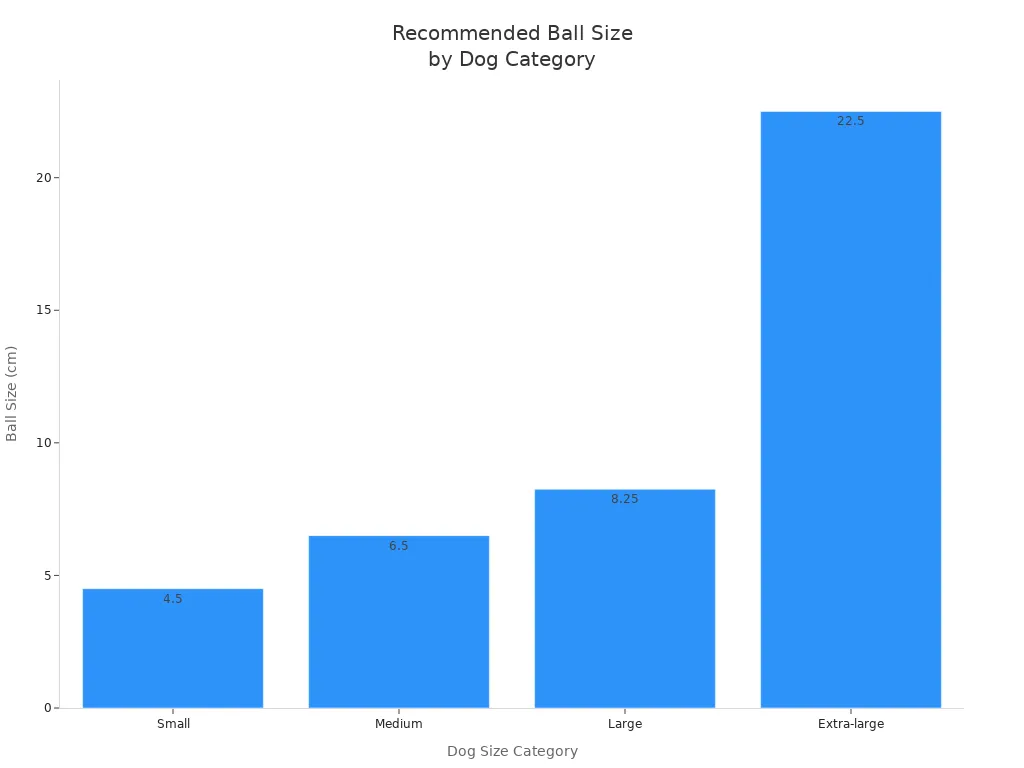
Dog ball size by breed chart
Choosing the right ball size for a dog depends on the breed’s size and jaw structure. Manufacturers recommend different ball sizes for each breed category to ensure safety and enjoyment. The following table provides a quick reference for matching ball size to breed. Owners can use this chart to find the best fit for their dogs.
Dog Size Category | Recommended Ball Size (cm) | Example Breeds |
|---|---|---|
Small | 4–5 | Chihuahuas, Yorkshire Terriers, Pugs |
Medium | 6.5 | Cocker Spaniels, Border Collies, Beagles |
Large | 7.5–9 | Labradors, German Shepherds, Golden Retrievers |
Extra-large | 20–25 | Great Danes, Mastiffs, Newfoundlands |
Small breeds (1.5–2 inches)
Small breeds need balls that measure between 1.5 and 2 inches in diameter. These sizes fit comfortably in their mouths and reduce the risk of choking. Many toy and miniature breeds fall into this group.
Pug
Shetland Sheepdog
Chihuahua
Yorkshire Terrier
Small balls allow these breeds to grip, carry, and fetch without strain. Owners should always check that the ball cannot be swallowed.
Medium breeds (2.5–3 inches)
Medium breeds require balls sized between 2.5 and 3 inches. This range suits their jaw size and play style. Many popular family dogs belong to this category.
Cocker Spaniel
Beagle
Border Collie
Australian Shepherd
Medium-sized balls provide a safe and enjoyable experience for these breeds. Owners should select balls that are firm but not too heavy.
Large breeds (3.5–4 inches)
Large breeds benefit from balls that measure 3.5 to 4 inches in diameter. These sizes prevent accidental swallowing and encourage active play. The following breeds are considered large:
Doberman Pinscher
Dogue de Bordeaux
German Shepherd
German Shorthaired Pointer
Golden Retriever
Labrador Retriever
Old English Sheepdog
Rottweiler
Scottish Deerhound
Large balls withstand strong jaws and energetic games. Owners should inspect balls regularly for signs of wear.
Herding breeds (18–30 inches)
Herding breeds often enjoy oversized balls, sometimes called “herding balls,” that range from 18 to 30 inches. These balls encourage natural herding instincts and provide mental stimulation. Breeds such as Border Collies and Australian Shepherds excel with these larger toys.
Note: Herding balls are not suitable for chewing. Owners should supervise play and remove the ball if it becomes damaged.
Manufacturers use breed size, jaw strength, and play style to determine recommended ball sizes. However, tennis balls and other toys can vary in diameter, bounce, and stiffness between brands. Owners should check product details and avoid assuming all balls of the same size are identical. The dog ball size by breed chart helps guide safe choices, but supervision and regular inspection remain important.
Why ball size matters
Safety risks
Selecting the correct ball size protects dogs from serious harm. When owners choose balls that do not match their dog’s breed, accidents can happen. Dogs may chip or break teeth if they bite into balls that are too hard or too small. Choking becomes a real danger when a ball fits entirely inside a dog’s mouth or breaks into pieces. Swallowed fragments can cause digestive blockages, leading to emergency vet visits.
Choking on torn fragments
Digestive blockages from swallowed pieces
Safety tip: Owners should always check the ball for damage before play and remove any broken toys immediately.
Comfort and play
Dogs enjoy playtime more when the ball fits their mouth and jaw. A ball that is too large frustrates dogs because they cannot grip or carry it. Small balls may slip out of their mouths or cause discomfort. The right size encourages active play and reduces stress. Dogs fetch, chew, and chase balls with ease when owners follow the dog ball size by breed chart.
Breed-specific needs
Each breed has unique jaw strength and play style. Herding breeds often prefer larger balls that stimulate their instincts. Small breeds need lightweight balls that do not strain their jaws. Owners should consider breed traits and activity levels when choosing toys. Matching ball size to breed ensures safe, comfortable, and enjoyable play for every dog.
Choosing the right ball
Measuring your dog’s mouth
Accurate measurement helps owners select a safe and comfortable ball. They can follow these steps to measure their dog’s mouth:
Place a soft measuring tape at the tip of the dog’s nose and extend it to the base of the skull.
Measure the length of the snout from the nose to about half an inch below the eyes.
Wrap the tape around the snout, half an inch below the eyes, with the mouth closed.
Measure the circumference of the mouth when it is open at its widest.
These measurements give a clear idea of the maximum ball diameter that fits safely. A ball should never fit entirely inside the mouth.
Considering breed and play style
Breed and play style influence the best ball choice. Some breeds, like retrievers, enjoy chasing and carrying balls. Others, such as herding breeds, prefer pushing larger balls. Owners should observe how their dog interacts with toys. Dogs with strong jaws may need tougher balls. Lightweight balls suit smaller breeds or those that tire easily. Matching the ball to the dog’s natural instincts increases engagement and safety.
Age and activity level
A dog’s age and energy level affect ball selection. Puppies need softer, smaller balls that protect developing teeth. Senior dogs benefit from lightweight or textured balls that are gentle on aging jaws. Highly active dogs require durable balls that withstand frequent play. Less active dogs may prefer balls that roll slowly or squeak for extra stimulation.
Tip: Owners should adjust ball size and material as their dog grows or ages to maintain safe and enjoyable play.
Types of dog balls
Dog owners can choose from several types of balls, each offering unique features and benefits. The table below highlights some of the most popular dog ball types available on the market.
Dog Ball Type | Features | Size Recommendation | Material |
|---|---|---|---|
Soccer Ball with Grab Tabs | Soft, bouncy, durable; not recommended for large breeds | N/A | Premium synthetic materials |
WeTest Premium Interactive Dog Ball | Soft, elastic, great puzzle ball; not recommended for large breeds | Small | Rubber |
Kong Air Tennis Balls 12-Pack | Bouncy, chewy, value priced; not recommended for large breeds | Small | Rubber |
Collar Harmless Floaty Fetch Ball | Floats, durable, versatile; not recommended for large breeds | N/A | N/A |
Chuck It Recycled Remmy | Bouncy, elastic, eco-friendly; not recommended for large breeds | Medium | Recycled natural rubber |
Outward Hound Treat Tumble Toy | Easy to clean, great for mental exercise; not as bouncy | N/A | N/A |
Nerf Dog Rubber Ball Dog Toy | Very inexpensive, lightweight; not as bouncy | N/A | Rubber |
Tennis balls
Tennis balls remain a classic choice for many dogs. They bounce well and are easy to throw. However, tennis balls can wear down quickly and may cause dental damage or choking hazards. Tougher alternatives designed for dogs offer greater safety and durability.
Rubber balls
Rubber balls provide high durability and withstand powerful chewers. They last longer during energetic play and offer a good bounce. Made from high-quality natural rubber, these balls are non-toxic and free from harmful chemicals. Some rubber balls may feel harder, which does not suit softer-mouthed dogs.
Tip: Owners should select rubber balls that match their dog’s jaw strength and play style.
Squeaky balls
Squeaky balls engage dogs’ instincts and provide mental stimulation. They enhance bonding between dogs and owners. Supervision is crucial because squeaky balls can pose choking hazards or trigger aggressive behavior in some dogs. Destructive play can be healthy, but aggressive actions require professional guidance.
Squeaky balls stimulate play.
Owners should monitor dogs to prevent swallowing pieces.
Balls for strong chewers
Dogs with powerful jaws need balls made from tough materials. These balls resist tearing and last longer. Rubber and specialized chew balls work best for strong chewers. Owners should inspect these balls regularly for damage and replace them when needed.
Safe play tips
Supervision
Owners should always supervise dogs during play with balls. Supervision helps prevent accidents and allows quick intervention if a dog tries to swallow or chew off pieces. Many dogs become excited during fetch or tug games. A watchful eye ensures safe play and reduces the risk of choking or injury. Children should never play unsupervised with dogs and balls, as they may not recognize hazards.
Inspecting for damage
Regular inspection of dog balls keeps playtime safe. Owners should check toys before each session. Look for holes, cracks, or missing parts. Balls with unravelled stitches or loose stuffing can pose serious health risks. Squeaky balls need extra attention, as exposed squeakers may become choking hazards. Rubber or plastic balls sometimes develop sharp edges or become brittle over time. Dirt and mold can also build up, especially if the ball is left outside. If cleaning does not remove grime or odor, replacement is necessary.
Replacing balls
Timely replacement of worn or damaged balls protects dogs from harm. Signs that a ball needs replacing include:
Holes, cracks, or missing parts
Loose stuffing or exposed squeakers
Sharp edges or hardening of the material
Excessive dirt or mold that cannot be cleaned
Lack of interest from the dog
A fresh ball keeps play engaging and safe. Owners should rotate toys to maintain their dog’s interest and prevent boredom. Regularly updating toys supports healthy, happy play sessions.
Matching ball size to breed keeps dogs safe and makes playtime more enjoyable. The table below shows how different breeds benefit from the right ball size:
Dog Size | Example Breeds | Recommended Ball Size |
|---|---|---|
Small | Chihuahua, Toy Poodle, Maltese | 4–5 cm diameter |
Medium | Cocker Spaniel, Border Collie, Staffy | 6–7 cm diameter |
Large | Labrador, German Shepherd, Golden Retriever | 7–9 cm diameter |
Giant | Great Dane, Mastiff | 9 cm or larger |
Key takeaways for owners include:
Choose high-quality, crush-proof balls.
Clean toys regularly for hygiene.
Always supervise dogs and check toys for damage.
Regular supervision and toy checks help prevent injuries and keep play safe for every dog.
FAQ
How can someone tell if a ball is too small for their dog?
A ball is too small if it fits entirely inside the dog’s mouth. Owners should choose a ball larger than the dog’s windpipe.
Are tennis balls safe for all breeds?
Tennis balls may not suit strong chewers. Some dogs can break them apart, which increases choking risks. Owners should select tougher balls for large or powerful breeds.
How often should owners replace dog balls?
Owners should inspect balls weekly. Replace any ball with cracks, missing pieces, or sharp edges. Fresh toys help prevent injuries and keep playtime safe.
