


Pet product liability insurance protects importers when imported pet items cause harm or damage. This coverage shields businesses from lawsuits and financial losses. Importers face unique risks because faulty pet products can injure animals or people. Legal action and compensation costs can threaten a company’s future.
Key Takeaways
Pet product liability insurance protects importers from lawsuits and financial losses caused by defective products.
Importers face unique risks due to unregulated pet products, making insurance essential for compliance and safety.
Securing the right insurance policy involves assessing business needs, requesting quotes, and maintaining compliance with safety standards.
Why importers need pet product liability insurance

Importer risks and exposures
Importers of pet products face unique risks that differ from those of domestic manufacturers. Many pet items, such as toys and grooming aids, lack regulation. This absence of oversight can lead to safety hazards for pets and their owners. Labels on these products often do not list all ingredients, which increases the risk of harmful substances going undetected. The following table highlights some common risks and exposures:
Risk/Exposure | Description |
|---|---|
Many pet products are not regulated, leading to potential safety hazards. | |
Safety Hazards | Unregulated materials can pose health risks to pets. |
Misleading Labels | Labels may not disclose all ingredients, allowing harmful substances. |
Importers must also meet strict compliance requirements. They need to verify that products meet U.S. safety standards and maintain extensive documentation. Failure to comply can result in warning letters, import refusals, or even debarment.
Aspect | Importers (FSVP) | Domestic Manufacturers |
|---|---|---|
Compliance Responsibility | Legally responsible for verifying compliance | Compliance with domestic regulations |
Documentation Requirements | Extensive documentation and hazard analyses | Standard documentation |
Risk of Non-compliance | FDA warning letters, import refusals, debarment | Varies by domestic regulations |
Legal and financial consequences
When a pet product causes injury or damage, importers can face serious legal consequences. Claims may arise from design defects, manufacturing errors, or improper warnings. U.S. law often holds importers strictly liable, meaning a claimant only needs to prove the product was defective. The table below outlines typical legal issues:
Type of Defect | Description |
|---|---|
Design Defects | Flaws in the product’s design before manufacturing. |
Manufacturing Defects | Problems during construction or production. |
Defects in Marketing | Inadequate warnings or instructions. |
Strict Liability | Liability without proof of wrongdoing if the product is defective. |
Negligence | Failure to exercise reasonable care, resulting in injury. |
Breach of Warranty | Product fails to meet promised standards, regardless of negligence. |
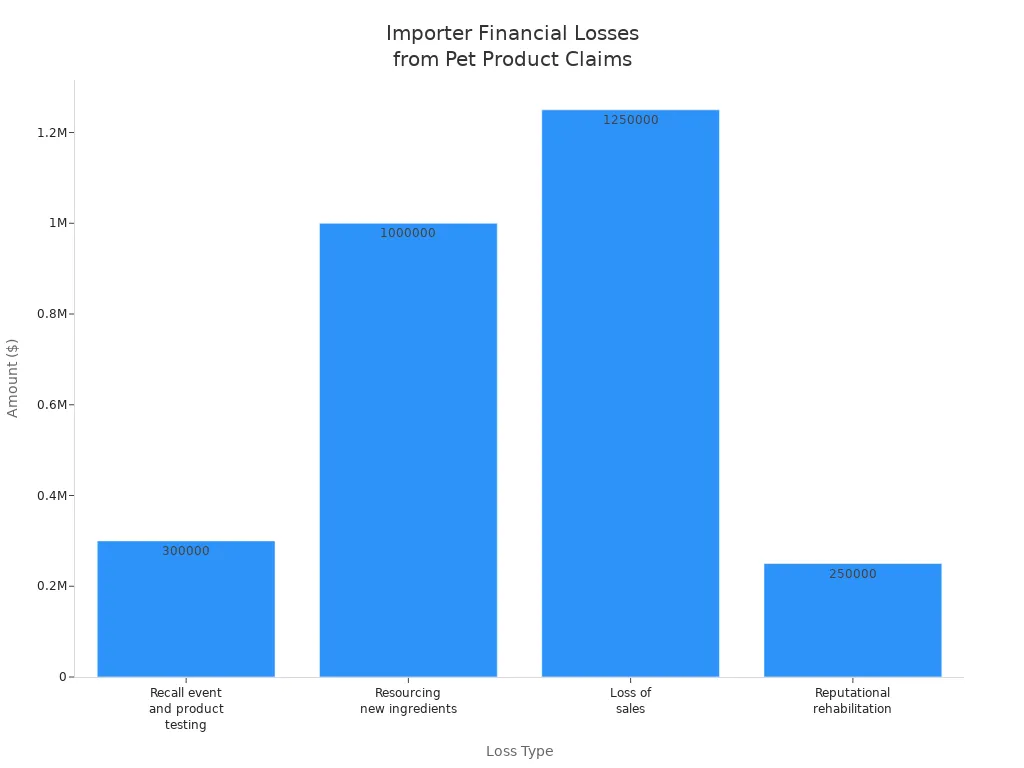
Financial losses from liability claims can devastate an importer’s business. A single recall, such as one caused by Salmonella contamination, can erase a year’s profit. General liability insurance does not cover recall costs, so companies must pay for notification, retrieval, and destruction. Claims from contaminated food or defective toys can exceed standard insurance limits, leading to additional expenses for legal defense and compensation.
A recall event and product testing can cost $300,000.
Resourcing new ingredients may reach $1,000,000.
Loss of sales due to contract cancellations can total $1,250,000.
Rebuilding reputation might require $250,000 in advertising.
Pet product liability insurance helps importers manage these risks. It covers legal costs, compensation, and claims that arise from injuries or damages. This protection allows businesses to continue operating even after a costly incident.
Pet product liability insurance coverage

Claims and incidents covered
Pet product liability insurance protects importers from a wide range of claims. These claims often result from injuries, property damage, or product defects. The following table shows the main types of claims covered and their descriptions:
Claim Type | Description |
|---|---|
Injury claims | Coverage for medical bills, legal fees, and settlements related to customer injuries caused by imported products. |
Defective goods | Protection against financial fallout from damages caused by manufacturing flaws in imported products. |
Labeling errors | Coverage for claims arising from incorrect or missing safety warnings on imported products, helping to protect brand reputation. |
Importers may also face claims for property damage if a product causes harm to a customer’s home or belongings. Insurance policies often cover bodily injury, property damage, and issues related to defective design or hidden hazards, such as toxic chemicals or contamination. Failure-to-warn claims, which involve missing or unclear instructions, are also included in many policies.
Real-world protection scenarios
Pet product liability insurance provides real protection in challenging situations. For example, if a dog toy imported from overseas contains a hidden sharp edge, a pet could suffer an injury. The pet owner might file a claim for medical expenses and damages. Insurance would help pay for legal defense, settlements, and compensation.
Another scenario involves contaminated pet food. If a batch contains harmful bacteria, several pets could become ill. The importer might need to recall the product, notify customers, and cover veterinary bills. Insurance can help pay for recall expenses, crisis communications, and customer notifications.
Tip: The cost of pet product liability insurance is much lower than the average cost of a liability claim. In 2017, the median award for product liability claims reached $1.5 million. Insurance helps businesses avoid devastating financial losses.
Key policy features
A strong pet product liability insurance policy includes several important features:
Coverage for bodily injury claims and related medical bills.
Protection for property damage caused by the product.
Coverage for accidental defective design and hidden defects, such as toxic chemicals or contamination.
Coverage for failure-to-warn claims, including insufficient instructions or warnings.
Recall expense coverage, which may include FDA-required recalls, voluntary withdrawals, retailer-mandated product pulls, customer notifications, product retrieval, replacement, and crisis communications.
Typical coverage limits in a Commercial General Liability (CGL) policy may include:
General Aggregate Limit: $2,000,000
Products/Completed Operations Aggregate Limit: $2,000,000
Each Occurrence Limit: $1,000,000
Medical Expense Limit: $5,000
Pet Protection (Animal Bailee): $2,500 per occurrence
Veterinarian Expense Reimbursement: $1,000 per occurrence
However, policies often exclude claims related to living animals, biological hazards, and employment practices exposures. Grooming and training services, as well as environmental hazards from animal waste, may not be covered under standard policies.
Global coverage is another key feature. Importers who sell products in multiple countries need insurance that addresses claims in different legal systems. Global coverage helps businesses comply with various laws and reduces risks when operating internationally.
How to get covered
Importers can follow these steps to secure pet product liability insurance:
Research providers: Several companies offer coverage for importers. The table below lists some recognized providers:
Insurance Provider
Description
Insurance Canopy
Offers product liability insurance for businesses that import, produce, distribute, or sell pet products in the U.S.
Coverwatch
Provides product liability that responds to pet injury claims and recall coverage for contamination events.
Sadler & Company
Offers product liability insurance for manufacturers, importers, and distributors, providing multiple quotations from various carriers.
Assess business needs: Importers should review their product categories, supply chain, and loss history. Products like food and supplements carry higher risks than home goods. A clean loss history over three to five years can help secure better terms.
Request quotes: Importers should contact providers and request quotes based on their business location, policy length, crew size, and desired coverage limits. Higher coverage limits and additional coverages will increase premiums but offer broader protection.
Prepare documentation: Insurers may ask for details about business operations, supply chain control, and past claims. Providing accurate information helps insurers assess risk and offer the right policy.
Review policy terms: Importers should check coverage limits, exclusions, and global coverage options. Policy terms can vary by provider, region, and the type of pets or products involved.
Apply and maintain compliance: After selecting a policy, importers should ensure ongoing compliance with retailer requirements and update their insurance as business needs change.
Note: Importers can lower premiums by improving workplace safety, providing staff training, and implementing theft-prevention programs. Transparency with insurers leads to more favorable quotes and better protection.
Pet product liability insurance gives importers essential protection against lawsuits and costly claims. Companies benefit from coverage for legal fees, settlements, and risks like product defects or property damage. Importers should evaluate their product risks and sales volume to secure the right policy. This insurance brings peace of mind and helps businesses thrive.
Protects against financial consequences of product-related claims
Covers legal expenses for bodily injury and property damage
Mitigates risks of costly lawsuits and damage to reputation
FAQ
What does pet product liability insurance cover?
The policy covers bodily injury, property damage, product defects, and legal expenses. Some policies include recall costs and crisis communications.
How can importers lower their insurance premiums?
Improve workplace safety
Train staff regularly
Maintain a clean claims history
Increase transparency with insurers
Is pet product liability insurance required by law?
Country | Requirement |
|---|---|
United States | Not mandatory |
Canada | Not mandatory |
EU | Varies by country |
