
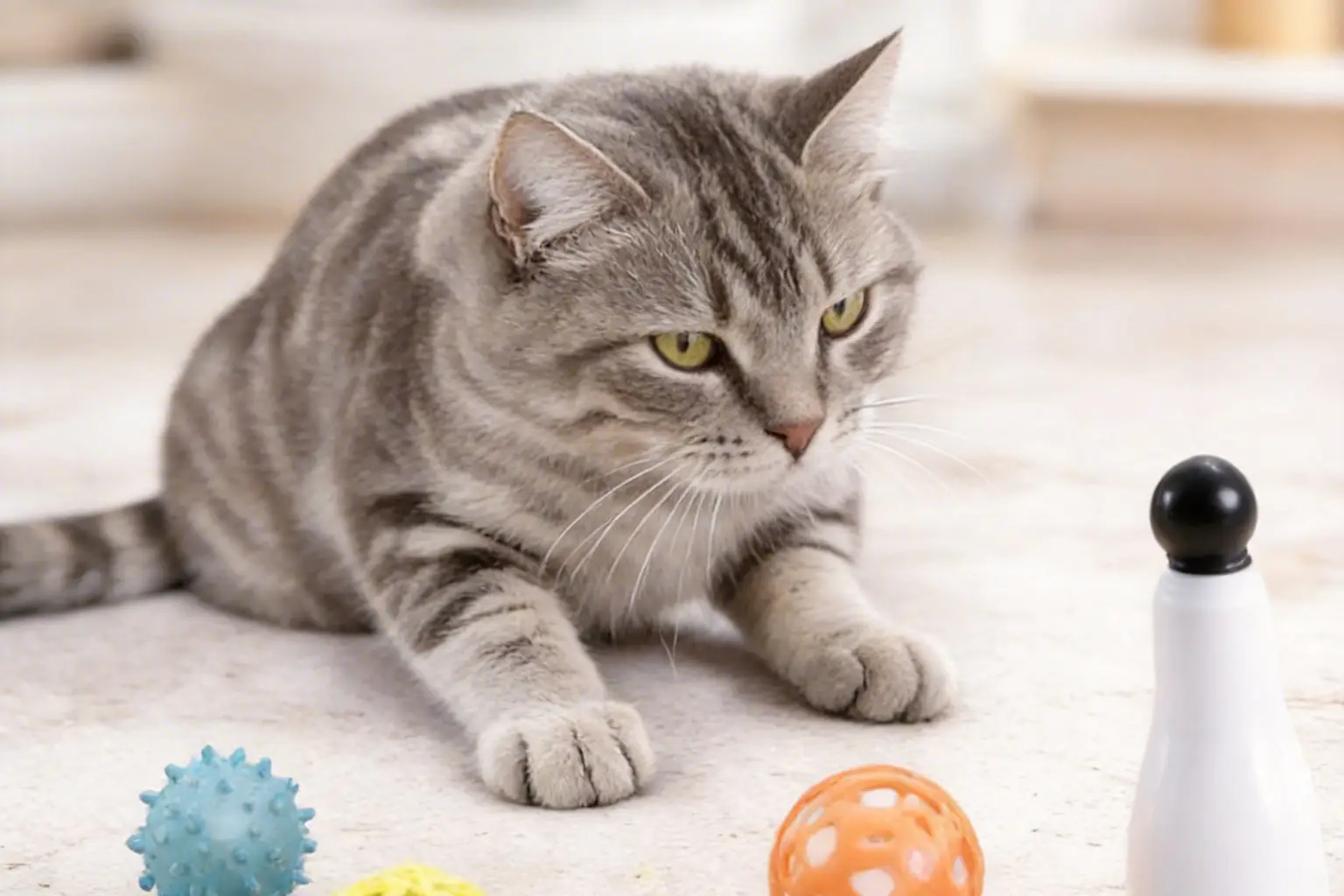


You might wonder if anyone regulates dog chew toys in the US. The FDA does not regulate them, but the CPSC and ASTM set safety expectations. Many pet owners buy chew toys every year because these products help with dental health and natural chewing. You must know dog chew toy US compliance.
Key Takeaways
Understand that dog chew toys are not regulated by the FDA. Compliance relies on general safety rules and industry best practices.
Always check for hazardous materials in your dog chew toys. Avoid using toxic substances like lead, phthalates, and BPA to protect pets and your business.
Stay updated on retailer requirements and safety standards like ASTM F963. Regular testing and complete documentation help prevent recalls and legal issues.
Dog Chew Toy US Compliance Overview

Are Dog Chew Toys Regulated?
You may expect strict rules for every product your dog uses, but dog chew toys do not have their own federal or state regulations in the United States. No law exists that targets only the safety of these toys. Instead, general consumer product safety rules apply to all pet products, including dog chew toys. These rules focus on chemical safety, labeling, and how the product performs. You must make sure your products do not contain harmful chemicals or pose choking hazards. Many companies also look to standards made for children’s toys, like ASTM F963, to guide their safety checks for pet toys.
Note: Even though no law directly covers dog chew toys, you still need to meet general safety expectations. If your product causes harm, you could face recalls or lawsuits.
Key Agencies and Standards
You might wonder which agencies watch over dog chew toy US compliance. The Consumer Product Safety Commission (CPSC) does not have rules just for dog toys. CPSC only steps in if a product causes injury to a person, not a pet. The Food and Drug Administration (FDA) does not regulate dog toys at all. You do not need to register your dog chew toys with the FDA.
ASTM International creates standards for many products. ASTM F963, for example, sets safety rules for children’s toys. However, this standard does not cover dog toys. Many retailers and brands still use ASTM F963 as a guide to help make their pet toys safer, even though it is not required by law.
Here is a quick overview of the main agencies and standards:
Agency/Standard | Role in Dog Chew Toy US Compliance |
|---|---|
CPSC | Investigates human injuries, no direct rules for dog toys |
FDA | Does not regulate dog toys |
ASTM F963 | Applies to children’s toys, not required for dog toys but often used as a guide |
You need to understand that dog chew toy US compliance relies on general safety rules and industry best practices. You should always check with major retailers, as they may have their own requirements for selling dog chew toys in the US.
CPSC Guidelines for Dog Chew Toys
General Safety Requirements
You need to understand that the Consumer Product Safety Commission (CPSC) does not have rules written just for dog toys. However, you still must follow general safety expectations. If your dog chew toy causes harm to a person, the CPSC may investigate. You should design toys to avoid sharp edges, small parts that can break off, or features that could trap a dog’s tongue or jaw. Always check for choking hazards and make sure the toy cannot splinter or shatter during normal use. You also need to avoid using materials that could release toxic chemicals when chewed or swallowed.
Tip: Test your products for durability and safety before selling them. This helps you prevent injuries and avoid costly recalls.
Hazardous Materials and Risks
You must pay close attention to the materials in your dog chew toys. Reports show that many non-compliant toys contain dangerous substances. Some of the most common hazardous materials found include:
Lead
Chromium
Cadmium
Phthalates
BPA
Arsenic
Bromine
Formaldehyde
PVC
Almost half of tested pet products have detectable levels of at least one hazardous chemical. For example, some tennis balls for dogs contained lead levels far above safe limits. In one case, a dog needed surgery after its tongue got stuck in a poorly designed toy. Heavy metals like lead and arsenic, as well as toxic plastics, can cause serious health problems for pets. You need to make sure your products meet dog chew toy US compliance standards to protect both pets and your business.
ASTM Standards and Retailer Expectations
ASTM F963 and Pet Toys
You may notice that ASTM F963 sets safety standards for children’s toys, but many companies use it as a guide for dog chew toy US compliance. This standard covers material quality, surface coatings, and physical safety. You can see the main requirements in the table below:
Requirement | Description |
|---|---|
Material Quality (4.1) | Ensures materials used in toys are safe and suitable for their intended use. |
Paint and Similar Surface-Coating Materials (4.3.5.1(2)) | Restricts the use of hazardous substances in surface coatings. |
Toy Substrate Materials (4.3.5.2) | Specifies requirements for hazardous substances in accessible materials, other than coatings, to prevent exposure to harmful chemicals. |
Cleanliness of Liquids, Pastes, Gels, and Similar Materials (4.3.6) | Ensures that certain toy materials are free from harmful contamination. |
Small Objects (4.6) | Prevents the inclusion of small parts that could pose choking hazards for young children. |
Accessible Edges (4.7) and Points (4.9) | Regulates the design of edges and points to avoid injury. |
Projections (4.8) | Limits dangerous protrusions that could cause harm. |
You should check these requirements when designing your dog chew toys. Many retailers expect you to follow similar safety rules, even if not legally required.
Major Retailer Compliance
Major retailers like Walmart, PetSmart, and Amazon demand strict safety and quality standards. You must provide certifications such as GRS, OEKO-TEX, ISO9001, and BSCI. Retailers require you to comply with environmental regulations and submit documentation that proves your products meet these standards.
Safety and quality certifications are essential.
Environmental compliance is mandatory.
Documentation must verify adherence to standards.
Recalls happen when products fail to meet these requirements. Kmart recalled dog toys for anti-freeze contamination in 2023. Walmart recalled plush dog toys for toxic stuffing and choking hazards in 2022. PetSmart recalled rubber chew toys for high levels of lead and phthalates in 2019.
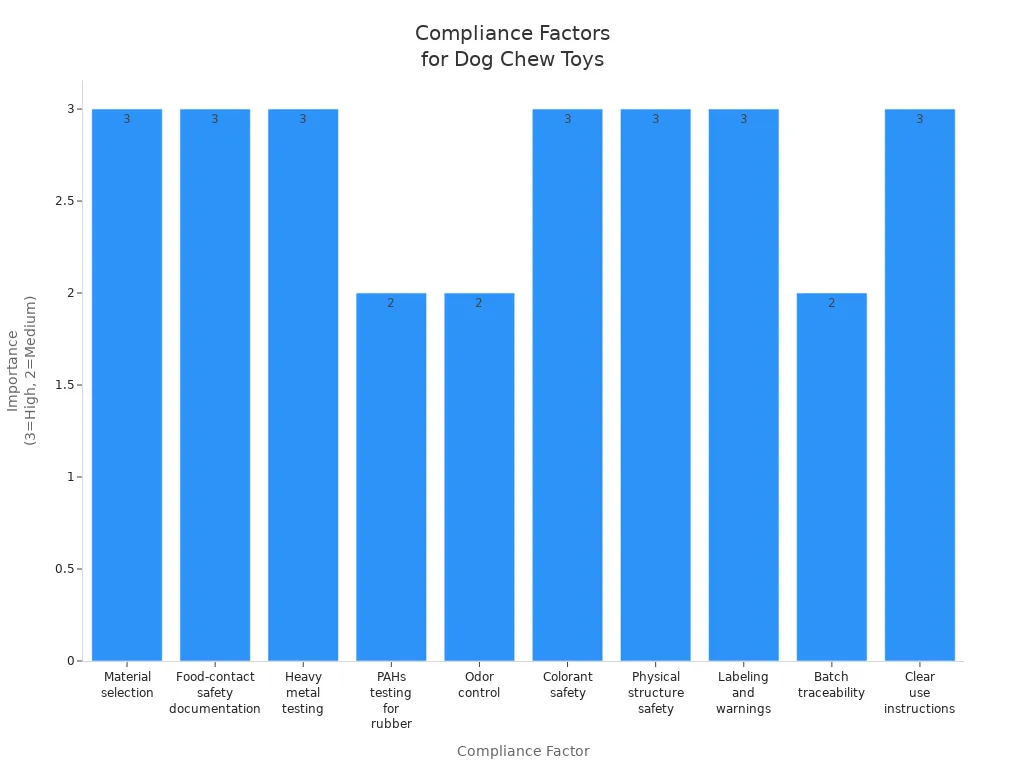
Retailer-specific compliance programs focus on material selection, heavy metal testing, colorant safety, and clear use instructions. The chart below shows the importance of these factors:
Tip: Always review retailer requirements before launching new products. This helps you avoid recalls and ensures your toys meet market expectations.
Common Pitfalls in Dog Chew Toy US Compliance
Overlooking Material Safety
You may think your dog chew toy is safe, but material safety often gets ignored. Many recalls happen because toys contain hazardous chemicals or pose choking risks. Some toys made from plastics can contain chemicals that are dangerous or even life-threatening to dogs. You should choose Grade A or natural rubber dog toys, or toys made from natural fibers such as cotton, wool, or hemp.
“One of the biggest issues from toys is potential choking hazards or intestinal obstruction,” says Dr. Rous. “This is more likely than damage from inhaling a chemical from the toy. Regularly inspecting toys for loose parts is imperative for pet owners and reporting to the manufacturer so they can follow up if any issues.”
Back in 2007, a dog owner tested her pet’s chew toys and found a tennis ball with 335.7 ppm of lead, which was below the limit for children’s toys at the time. You must check for lead, phthalates, and other toxins to meet dog chew toy US compliance.
Description | |
|---|---|
ASTM F963 | Ensures lead content is under 100 ppm and no sharp points are present. |
REACH Compliance | Restricts hazardous substances and heavy metals in pet toys sold in Europe. |
CPSIA Compliance | Enforces lead and phthalate limits for children’s products, often followed voluntarily by pet toy manufacturers. |
CA Prop 65 | Ensures no chemicals known to cause cancer or birth defects are present beyond safe levels. |
ISO 8124 | Global toy safety standard similar to EN71/ASTM. |
Incomplete Documentation
You need to keep complete records for every dog chew toy you sell. Missing documents can lead to shipment blocks, recalls, or legal problems.
Compliance mistakes carry the highest severity of any mistake category, because a compliance failure can block a shipment entirely, trigger a recall, or create legal liability — consequences that go beyond the commercial cost of a quality defect.
You should include these documents:
Compliance with ASTM F963 for mechanical safety and toxic substance limits.
Testing for heavy metals like lead, cadmium, and mercury, especially in painted toys.
Phthalate testing for soft plastic and vinyl toys, ensuring levels are below 0.1% by weight.
Assessment of small parts to prevent choking hazards, particularly for toys aimed at small pets.
Adherence to FDA regulations for pet food labeling and safety, including ingredient disclosure.
Keeping your documentation up to date protects your business and helps you avoid costly mistakes.
Compliance Tips for Manufacturers and Importers
Steps for Dog Chew Toy US Compliance
You can take several practical steps to meet dog chew toy US compliance and satisfy retailer requirements. Start by checking which safety standards apply to your products. Review ASTM F963, EN71, and California Proposition 65. Develop a custom inspection checklist for your dog toys. This helps you address unique risks and product features.
Follow chemical regulations like California Proposition 65 and TSCA.
For electronic toys, make sure you meet button cell battery rules.
Align your processes with major retailer codes that reference ASTM F963 and CPSC guidelines.
Set up a testing program for physical, mechanical, and chemical hazards.
Keep all documentation current and ready for review.
Schedule regular factory inspections and audits.
Obtain third-party certification for ongoing factory surveillance.
Tip: A clear checklist and regular audits help you avoid costly recalls and keep your products on store shelves.
Working with Labs and Staying Updated
You should always use ISO/IEC 17025 accredited laboratories for testing. These labs provide reliable results for compliance testing. Send your samples to controlled environments for accurate analysis. Consider third-party certification under ISO/IEC 17067 Type 3 schemes for extra assurance.
Stay updated on new regulations and retailer requirements. Review your compliance program often. Update your documentation and inspection checklists as standards change. This approach keeps your dog chew toy US compliance strong and protects your business from unexpected issues.
You ensure dog chew toy US compliance by following CPSC guidelines and retailer standards. Stay proactive with safety assessments and third-party testing. Keep updated on evolving regulations like California Proposition 65 and ASTM F963. For support, industry groups and trade organizations offer guidance:
Conduct safety assessments regularly
Review state-specific laws and retailer requirements
Organization | Support Offered |
|---|---|
Trade Associations | |
Regulatory Agencies | Updates on standards |
FAQ
What certifications do you need for dog chew toys in the US?
You should provide safety certifications like ASTM F963, GRS, or OEKO-TEX. Retailers may require additional documentation for chemical and material safety.
How often should you test dog chew toys for compliance?
You should test every batch before shipment. Regular testing helps you catch hazards early and keeps your products safe for pets.
Can you sell dog chew toys without compliance documents?
Risk | Outcome |
|---|---|
Shipment | Blocked |
Recall | Possible |
Legal Issue | Likely |
You must keep compliance documents to avoid shipment blocks, recalls, or legal problems.
