


The Shore A hardness scale measures how firm or soft a material feels. This scale helps buyers choose safe and long-lasting chew toys for dogs. Matching the right dog chew toy hardness shore A to a dog’s breed and age prevents injuries, improves safety, and makes toys last longer.
Puppies need soft toys (15–30A).
Power chewers benefit from firmer toys (60–80A).
Key Takeaways
Choose chew toys based on Shore A ratings to match your dog’s chewing style and strength.
Soft toys (15–30A) suit puppies, while firm toys (60–80A) are best for power chewers.
Inspect and replace toys regularly to prevent dental injuries and choking hazards.
Dog Chew Toy Hardness Shore A Basics
What Is Shore A?
Shore A is a scale that measures how hard or soft a material feels. Manufacturers use this scale to describe the firmness of rubber and similar materials in dog chew toys. The Shore A scale helps buyers compare products and choose the right toy for their dog’s needs. For example, a toy with a low Shore A number feels soft and flexible, while a high number means the toy feels firm and tough.
Shore A Hardness | Description | Application |
|---|---|---|
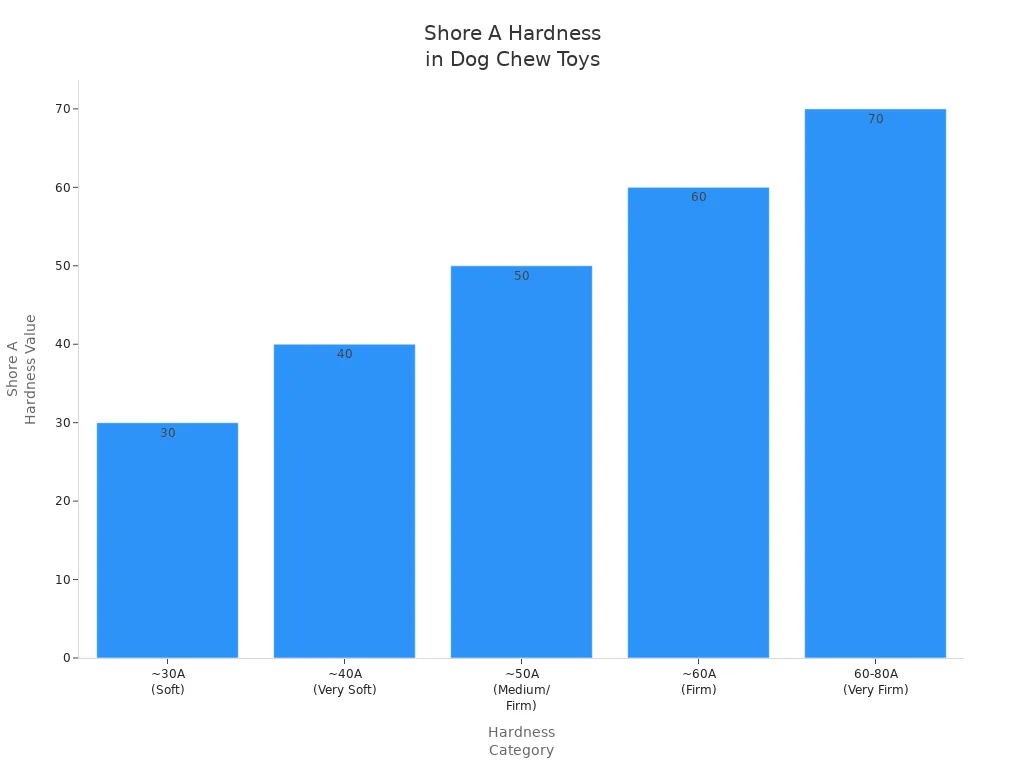
~30A (Soft) | Very soft | Ideal for puppies, gentle on teeth |
~40A (Very Soft) | Rubber-like, squeezable | Good for puppy toys, tears easily if overstretched |
~50A (Medium) | Holds shape, some give | Common for adult dog bowls and enrichment products |
~60A (Firm) | Stiff, puncture-resistant | Durable for large or boisterous dogs |
60-80A (Very Firm) | Extremely firm | Best for power chewers, maximum durability |
How the Scale Works
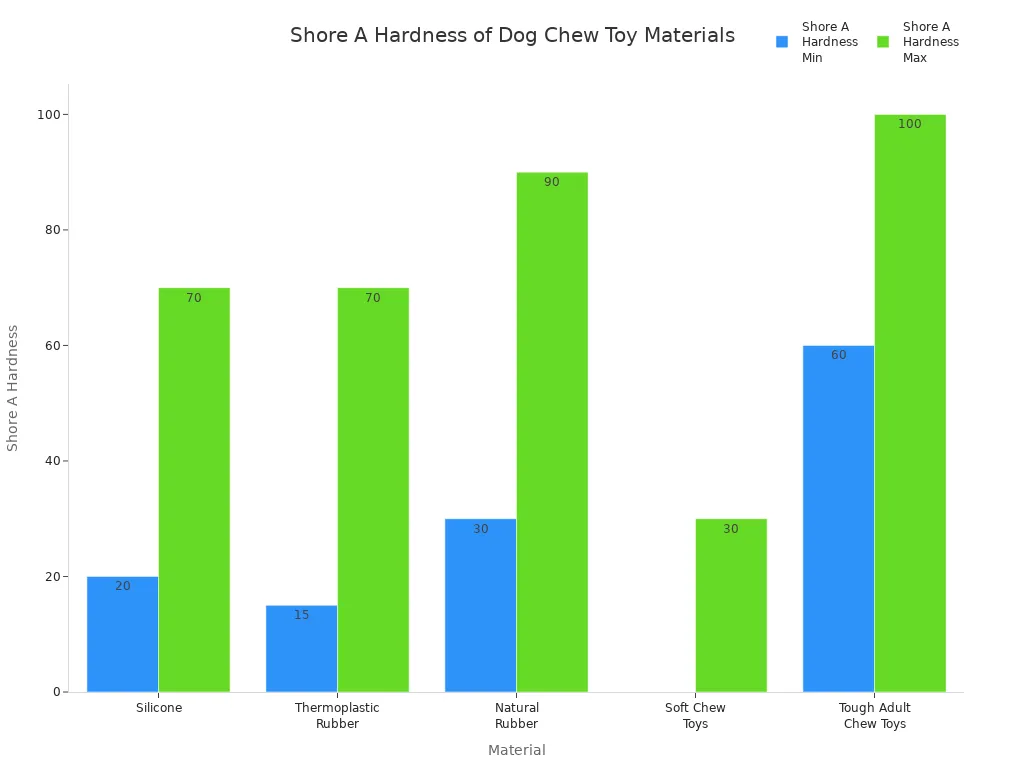
The Shore A scale uses a tool called a durometer to test the hardness of materials. The tool presses into the surface and gives a number from 0 (very soft) to 100 (very hard). Most dog chew toy hardness shore A ratings fall between 30A and 80A. Different materials have different Shore A ranges. For example:
Material | Shore A Hardness Range | Description |
|---|---|---|
Silicone | 20A – 70A | Soft to firm, varies by formulation |
Thermoplastic Rubber | 15A – 70A | Varies based on use case |
Natural Rubber | ~30A to ~90A | From soft puppy toys to firm KONGs |
Soft Chew Toys | ~30A or below | Very soft, suitable for puppies |
Tough Adult Chew Toys | 60A or above | Stiffer, for aggressive chewers |
Why Hardness Matters
Choosing the right dog chew toy hardness shore A rating protects a dog’s teeth and health. If a toy is too hard, it can cause fractured or worn teeth. If a toy is too soft, it may tear or break apart, creating choking hazards or causing blockages in the stomach or intestines. Other risks include damage to the hard palate and jaw.
Tip: Always check the Shore A rating and match it to your dog’s chewing style and strength for safety.
Regulatory standards, such as ASTM D2240 and DIN EN ISO 868, guide how manufacturers measure Shore A hardness. These standards help ensure that dog chew toys meet safety and quality requirements.
Choosing the Right Hardness
Chewing Styles and Shore A
Dogs chew in different ways. Some nibble gently, while others bite with force. The Shore A hardness scale helps match toys to these chewing styles. Softer toys suit gentle chewers and puppies. Medium-hard toys work well for most adult dogs. Hard toys withstand strong jaws and aggressive chewing.
Chewing Style | Recommended Shore A Range | Toy Features |
|---|---|---|
Gentle Nibbler | 30–40A | Soft, flexible, easy to compress |
Moderate Chewer | 50–60A | Balanced firmness, some give |
Power Chewer | 60–80A | Very firm, puncture-resistant |
Note: Most all-purpose dog toys use a Shore A rating between 50 and 60. This range balances durability and safety for average chewers.
Breed, Age, and Jaw Power
Breed, age, and jaw strength influence the ideal dog chew toy hardness shore A. Small breeds need softer or slimmer toys. Medium breeds benefit from balanced, medium-hard toys. Large breeds require thicker, more durable toys. Puppies and seniors have sensitive teeth and jaws, so soft chews are best for them. Adult dogs tolerate a wider range of hardness levels.
Medium dogs benefit from balanced, medium-hard chews.
Large dogs require thicker, more durable chews.
Soft chews are best for puppies, seniors, and dogs with sensitive teeth.
Medium chews are suitable for most adult dogs.
Hard chews are intended for experienced, strong chewers.
Safe chews for puppies are soft, pliable, and sized for developing teeth and smaller jaws. Adult dogs can use toys with higher Shore A ratings. Senior dogs should avoid very hard toys, such as antlers or compressed nylon chews.
Risks of Too Hard or Too Soft Toys
Choosing the wrong hardness can cause problems. Hard toys may lead to painful tooth fractures. A broken tooth can make a dog avoid eating, which may cause weight loss. If the fracture exposes the pulp, the dog feels severe pain and faces infection. Chronic broken teeth can result in abscesses that require veterinary care.
Hard toys can cause painful tooth fractures, exposing the pulp and leading to infection.
Chewing on hard objects can wear down tooth enamel, causing discomfort and possible infection.
Soft toys are safer for puppies, as they reduce the risk of tooth damage.
Chewing on hard objects can also lead to gastrointestinal blockages if large fragments break off and get swallowed. These blockages often require surgery. Soft toys may tear quickly, creating choking hazards or digestive issues. Owners should always check toys for damage and replace them when needed.
Tip: Match the Shore A hardness to your dog’s chewing style, breed, and age. This helps prevent dental injuries and digestive problems.
Step-by-Step Toy Selection
Assess Your Dog’s Needs
Dog owners should evaluate their pet’s chewing habits before choosing a toy. The following steps help identify the best match:
Observe chewing style and energy. Some dogs chew aggressively, while others nibble gently.
Select size and hardness. Toys should be longer than the dog’s jaw and suitable for their age and chewing strength.
Review the ingredient panel. Avoid toys with allergens or artificial additives. Single-ingredient chews offer safer options.
Supervise the first session. Watch how the dog interacts with the new toy and adjust choices if needed.
Tip: Owners who understand their dog’s chewing behavior can prevent injuries and improve toy longevity.
Read Shore A Ratings on Packaging
Manufacturers often display Shore A ratings on packaging. These numbers indicate the firmness of the toy. A rating between 50 and 60 suits most adult dogs. Puppies and seniors need softer toys, while power chewers require firmer options. Reading the dog chew toy hardness shore A rating helps buyers select toys that match their pet’s needs.
Size and Safety Tips
Safe chew toys must fit the dog’s mouth properly. Owners should follow these guidelines:
The toy should extend out both sides of the mouth and never fit entirely inside.
Choose sizes based on dog weight:
Small for breeds up to 10kg
Medium for dogs up to 25kg
Large or extra-large for dogs over 25kg
Replace toys as puppies grow and their jaw strength increases.
Inspect toys weekly for damage. Replace toys with deep bite marks or cracks.
A toy should feel firm and not leave a mark when pressed with a fingernail.
Note: Regular inspection and proper sizing reduce choking risks and dental injuries.
Materials and Maintenance
Common Chew Toy Materials
Dog owners often choose toys made from natural rubber, nylon, thermoplastic elastomers (TPE), silicone, cotton, or hemp. Each material offers unique benefits:
Natural rubber provides flexibility and durability. It reduces tooth damage and rarely cracks or splinters.
Synthetic nylon flakes off into small pieces instead of splintering. This design improves safety for aggressive chewers.
TPE balances flexibility and strength. It suits dogs that need a tough but not overly hard toy.
Silicone is durable and safe, though it does not biodegrade easily.
Cotton and hemp ropes are biodegradable and contain minimal chemicals.
Toys made from natural rubber rank among the safest choices for dogs. Owners should avoid lower-quality plastics and dyes, which may pose health risks.
Typical Shore A Ranges
Manufacturers use Shore A ratings to describe the hardness of chew toy materials. The following table shows typical ranges:
Material | Shore A Range | Durability Level |
|---|---|---|
Natural Rubber | 30–90A | Flexible to very firm |
Thermoplastic Elastomer | 15–70A | Soft to firm |
Nylon | 70–90A | Very firm |
Silicone | 20–70A | Soft to firm |
Cotton/Hemp Rope | N/A | Soft, not rated |
Natural rubber and nylon offer high durability. TPE and silicone provide moderate firmness. Cotton and hemp ropes do not use Shore A ratings but remain soft and gentle.
Cleaning and Replacement
Regular cleaning prevents bacterial growth and keeps toys safe. Owners should follow these guidelines:
Clean rubber, nylon, and plastic toys with warm water and pet-safe detergent or vinegar-water solution. Many are dishwasher safe.
Wash rope toys in a pillowcase using hot water and a gentle cycle. Dry thoroughly to prevent mold.
Machine-wash plush toys on a gentle cycle. Hand wash squeaky toys to protect internal parts.
Use dish soap for rubber and nylon toys to remove grime. White vinegar disinfects without harsh chemicals.
Rinse all toys thoroughly and air dry completely.
Toy Type | |
|---|---|
Hard Chew Toys | Every two weeks |
Soft Plush Toys | At least once a month |
Rope Toys | Every week or two |
Owners should inspect toys weekly. Replace toys with cracks, loose pieces, or sharp edges. Regular maintenance extends toy life and protects dogs from injury.
Dog owners improve safety and durability by understanding Shore A hardness ratings. They should match toy hardness and size to their dog’s chewing style, breed, and age. Common mistakes include ignoring material quality, choosing incorrect sizes, and overlooking weak points. Buyers should check Shore A ratings and inspect toys for structural integrity.
FAQ
What does Shore A mean on dog toy packaging?
Shore A shows how firm or soft the toy feels. Manufacturers use this scale to help buyers choose the right chew toy for their dog.
How often should owners replace chew toys?
Owners should inspect toys weekly. Replace any toy with cracks, deep bite marks, or loose pieces to keep dogs safe.
Can puppies use toys with high Shore A ratings?
Puppies need soft toys with low Shore A ratings. Hard toys may damage their developing teeth and cause pain.
