


I always look for a dental chew toy dog manufacturer that provides OEM chew toys meeting FDA standards for pet product safety. I know that safety and quality matter. Material selection, strict compliance, and reliable manufacturing from a reputable dental chew toy dog manufacturer keep pet products safe. I saw over 45 pet product recalls in five years. OEM dental chew toys need strong safety controls.
Key Takeaways
Always choose dental chew toys that meet FDA standards. Look for toys made from non-toxic, food-contact materials to ensure your dog’s safety.
Request safety and compliance documentation from manufacturers. This includes FDA compliance certificates and third-party testing reports to confirm the toys are safe.
Select chew toys based on your dog’s size and chewing strength. Proper sizing prevents choking hazards and ensures effective dental health benefits.
FDA Standards for Dental Chew Toys
Key FDA Requirements
When I choose dental chew toys for dogs, I always check if the manufacturer follows FDA requirements. The FDA sets strict rules for pet products that touch food or go into a pet’s mouth. These rules protect pets from harmful chemicals and unsafe materials. I look for chew toys made with FDA-approved materials. These materials must be non-toxic and safe for food-contact. I know that food-contact safety is not just a label. It means the toy will not leach chemicals or break down in a way that could harm my dog.
FDA testing checks for harmful substances like lead, phthalates, and BPA. I want to see proof that the chew toys passed these tests. I also look for food-grade silicone or other food-contact material in the product description. These materials give me confidence that the toy is safe for my dog to chew every day. I always ask the manufacturer for documentation showing compliance with FDA testing and food-contact safety. This step helps me avoid unsafe pet products and ensures the toys meet the highest safety standards.
Tip: I always request a copy of the FDA compliance certificate before I order OEM chew toys. This document proves the manufacturer uses non-toxic, food-contact material and follows all FDA rules.
Other Relevant Safety Standards
I know that FDA rules are important, but I also check for other global safety standards. Many top dental chew toy manufacturers hold certifications like CE, RoHS, ISO 13485, ISO 9001, BSCI, Sedex, and LFGB. These standards show the company cares about safety, quality, and ethical production. I often see chew toys tested to meet REACH, EN71, and ASTM F963 standards. These tests check for chemical safety, mechanical strength, and overall product quality.
Here is a list of common certifications I look for when choosing OEM dental chew toys:
ISO 13485
ISO 9001
BSCI
Sedex
CE
RoHS
FDA
LFGB
I always ask the manufacturer to share proof of these certifications. This step helps me confirm that the chew toys meet both FDA and global safety standards. I want to make sure the pet products I buy use non-toxic, food-contact material and pass all food-contact safety tests. I also look for chew toys made from food-grade silicone or other safe materials. When I see these certifications, I know the OEM manufacturer takes safety and compliance seriously.
Note: Global safety standards like CE, RoHS, and EN71 add another layer of protection for pets. I always choose chew toys that meet both FDA and international requirements.
I believe that following FDA and global safety standards is the best way to keep pets safe. I trust OEM manufacturers who use non-toxic, food-contact material and pass all food-contact safety and FDA testing. This approach gives me peace of mind when I select dental chew toys for my dog.
Safety in OEM Manufacturing
Material Selection and Testing
When I select OEM dental chew toys for my dog, I always start with the materials. I know that the right material makes a big difference in safety and durability. I avoid recycled plastics because they often contain toxic chemicals. I also stay away from synthetic polymers like nylon if they have harmful additives. Instead, I look for FDA-compliant materials. These materials meet strict standards for food-contact safety and non-toxicity. I want my dog’s chew toys to be safe for daily use.
I prefer BPA-free TPR (thermoplastic rubber), EVA, and natural rubber. These materials offer strong resistance to aggressive chewing and do not leach harmful chemicals. I also like sustainable options, such as eco-friendly rubber, because they help protect the environment. I always check if the manufacturer uses food-contact material that meets FDA standards. This step gives me peace of mind about food-contact safety and compliance.
Before I buy, I ask about safety testing. I want to see proof that the chew toys have passed third-party testing for non-toxic properties. I look for tests that check for lead, phthalates, and other harmful substances. I also want to know if the rubber and other materials have passed food-contact safety testing. I believe that regular testing is the best way to ensure non-toxicity and compliance with FDA and global standards.
Here are the materials I trust most for OEM dental chew toys:
BPA-free TPR and EVA
Natural rubber
FDA-compliant food-contact material
Eco-friendly and sustainable rubber
Tip: I always request third-party safety testing reports before I place an order. These reports confirm that the chew toys meet all food-contact safety and non-toxicity requirements.
Manufacturing Process Controls
I know that even the best materials need strong manufacturing controls to keep pet products safe. I always ask the OEM manufacturer about their quality control steps. I want to see a clear process for safety testing and compliance at every stage.
Here is a table that shows the main quality control steps I look for in OEM dental chew toy manufacturing:
Quality Control Step | Description |
|---|---|
Incoming Quality Control (IQC) | Material audits for toxicity and flammability screening before warehouse entry. |
In-Process Quality Control (IPQC) | Automated tension testing and visual inspections during assembly to catch defects early. |
Final Quality Control (FQC) | 100% needle detection to ensure no contaminants are present before packaging. |
Outgoing Quality Control (OQC) | Pre-shipment verification using AQL standards to ensure batch consistency. |
I also want to know about the safety protocols that reduce the risk of product recalls. I ask the manufacturer if they use mechanical pull and bite tests. These tests make sure the chew toys can handle strong chewing without breaking. I check if they do chemical safety screening on all raw materials. I want to see calibrated needle detection to catch any metallic residues. I also look for in-line quality control and tensile and seam integrity checks. These steps help guarantee the durability and safety of the rubber chew toys.
Safety Protocols | Description |
|---|---|
Mechanical Pull and Bite Tests | Ensures that all components withstand a 90-Newton pull force for 10 seconds to prevent detachment. |
Chemical Safety Screening | 100% of raw materials are screened for harmful chemicals, ensuring lead and phthalate limits are met. |
Calibrated Needle Detection | All toys are checked for metallic residues to prevent ingestion risks, with strict sensitivity standards. |
In-Line Quality Control | A multi-stage QC process is integrated to identify and eliminate mechanical vulnerabilities before shipment. |
Tensile & Seam Integrity Checks | Reinforced construction is verified through rigorous pull tests to ensure durability against aggressive chewing. |
I believe that strong process controls and regular safety testing are the keys to high-quality, non-toxic pet products. I always choose OEM manufacturers who follow strict FDA and global standards for food-contact safety, compliance, and quality. This approach helps me avoid recalls and keeps my dog’s rubber chew toys safe and reliable.
Natural Rubber Pet Chew Toys
Benefits of Natural Rubber
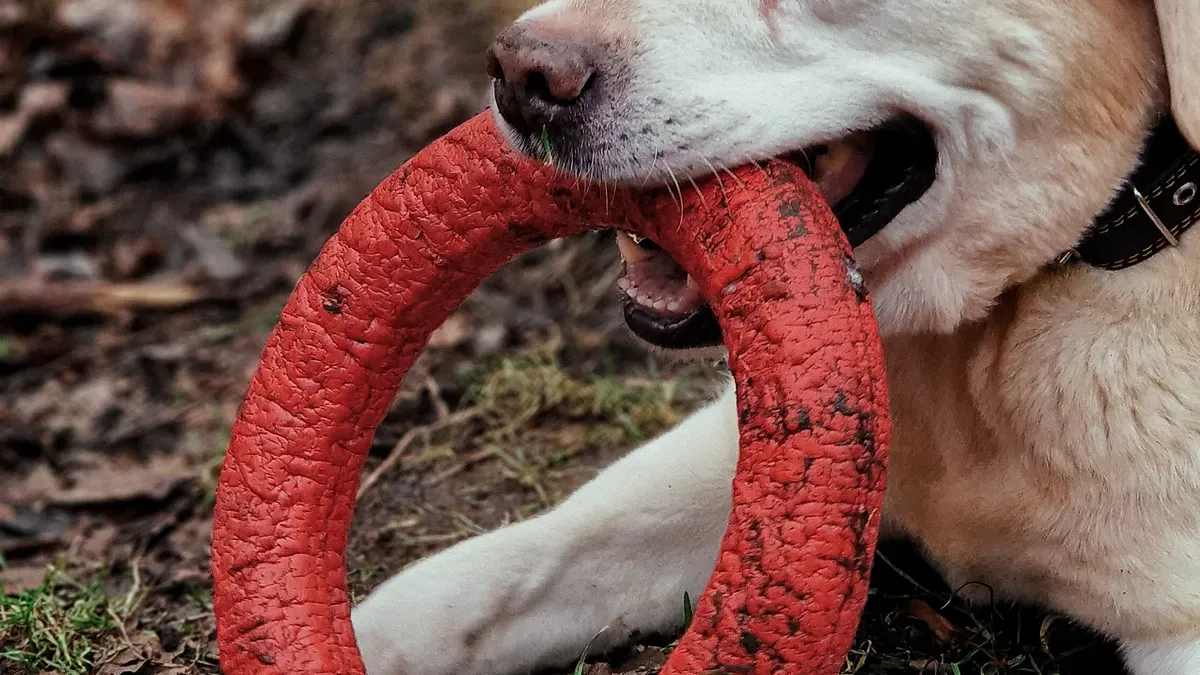
I always choose natural rubber pet chew toys for my dog because they offer real health benefits. When I compare them to synthetic options, I see clear advantages. These toys have textured surfaces that help scrape plaque and massage gums. They act like a natural toothbrush for my dog. I notice that natural rubber dog toys flex under pressure. This feature reduces the risk of tooth fractures during chewing. I feel confident that these safe rubber pet toys provide gentle dental exercise. I also like that natural rubber is softer and more eco-friendly. It works well for moderate chewers who need safe rubber pet toys every day.
Textured surfaces help clean teeth and massage gums.
Flexible rubber reduces the risk of tooth injuries.
Softer material suits moderate chewers.
Safe rubber pet toys made from natural rubber are non-toxic and food-safe.
I always ask my oem supplier for natural rubber chew toy oem options. I want rubber dog toys that balance safety and durability. I know synthetic rubber can last longer for power chewers, but I prefer the safety of natural rubber pet chew toys for most pet products.
Eco-Friendly and Sustainable Options
I care about the environment when I pick pet products. Natural rubber pet chew toys come from renewable plant sources. These rubber dog toys break down over time, making them more eco-friendly than synthetic options. I always check if my oem manufacturer uses sustainable rubber plantations. I want my natural rubber chew toy oem orders to support ethical sourcing.
Here is a table that shows the pros and cons of natural rubber in safe rubber pet toys:
Pros of Natural Rubber | Cons of Natural Rubber |
|---|---|
Durable and resilient | Mild odor (natural latex smell) |
Safe and non-toxic | Higher cost than synthetics |
Great texture and bounce | Sourcing challenges (climate, ethics) |
Eco-friendly and biodegradable | Not easily recyclable |
Latex allergies (rare in pets) |
I also look for eco-friendly certifications in pet products. Some oem suppliers use GOTS-certified organic cotton in their natural rubber dog toys. This step adds another layer of safety and sustainability. I always choose natural rubber chew toy oem options that meet strict standards for safe rubber pet toys and eco-friendly rubber dog toys.
Choosing a Dental Chew Toy Dog Manufacturer
Verifying Compliance and Certifications
When I look for a dental chew toy dog manufacturer, I always start by checking their certifications. I know that real certifications prove the manufacturer meets strict safety and quality standards for pet products. I ask for official documents and check if they are up to date. I also confirm that the certifications cover FDA, rubber, and food-contact safety testing. This step helps me avoid unsafe chew toys and ensures the manufacturer follows all compliance rules.
Here is a table of important certifications I look for when choosing a dental chew toy dog manufacturer:
Certification | Description |
|---|---|
ISO9001 | Quality management system |
BSCI | Social compliance |
ISO22000 | Food safety management |
ISO14001 | Environmental management |
HACCP | Hazard analysis and critical control points |
BRC | Global standard for food safety |
GMP | Good manufacturing practices |
OHSAS18001 | Occupational health and safety management |
FSC | Forest stewardship council |
ISO13485 | Medical devices quality management |
GSV | Global security verification |
SA8000 | Social accountability standard |
Tip: I always request third-party safety testing reports and certificates before I order rubber chew toys. This step helps me confirm the authenticity of the manufacturer’s compliance.
Evaluating Manufacturer Capabilities
I want my pet products to meet the highest safety and quality standards. I always evaluate the dental chew toy dog manufacturer’s capabilities before I place an order. I check if they offer OEM, ODM, or white label options. OEM gives me full control over the design and rubber material. ODM lets me use proven designs with minor changes. Both options help me get safe, custom chew toys for my brand.
Type | Description | Advantages |
|---|---|---|
OEM | Full control over product design and specifications. | Customization control, brand differentiation, intellectual property protection. |
ODM | Utilizes existing designs with minor customization. | Faster market entry, lower costs, simpler manufacturing process. |
I also look for these key capabilities in a dental chew toy dog manufacturer:
VOHC Seal of Approval for dental chew toys
Proper size and texture for different dogs
Digestible, safe rubber ingredients
Low-calorie chew options for healthy pets
Chew toys that dogs enjoy using
I always ask about their safety testing process. I want to see regular testing for rubber, food-contact, and non-toxic properties. I check if the manufacturer uses advanced testing for durability and safety. I also make sure they follow all FDA and global standards for compliance. This approach helps me choose the best dental chew toy dog manufacturer for safe, high-quality rubber pet products.
Practical Tips for Buyers
Selecting Safe and Durable Chew Toys
I always check for safety and durability when I buy chew toys for my dog. I look for oem pet products that use rubber and pass strict testing. I want toys with flexible, textured surfaces because these help clean teeth and massage gums. I check for the Veterinary Oral Health Council seal. This shows the chew meets standards for plaque and tartar reduction. I also look for active ingredients that help prevent tartar. I ask my oem supplier about safety certification and regular testing. I know that rubber dog toys must be tough enough for daily chewing. I avoid toys that break easily or contain unsafe rubber. I trust oem pet products that use food-contact rubber and pass third-party testing.
Flexible, textured surfaces for dental health
Active ingredients for tartar control
Regular testing for non-toxic rubber
Tip: I always ask for safety certificates and testing reports before I buy oem rubber dog toys.
Sizing and Design for Different Dogs
I choose chew toys based on my dog’s size, age, and chewing strength. I know that proper sizing prevents safety risks. For example, the Nylabone Power Chew Curvy Dental Bone works for dogs up to 50 pounds. I select rubber dog toys that are large enough so my dog chews from the side, not top and bottom. I avoid toys that are too small because they can cause choking. I pick oem pet products with different sizes for each breed. If I have more than one dog, I choose toys for the largest chewer. I check the hardness and composition of the rubber to match my dog’s chewing needs. I want toys with various textures to help remove plaque and tartar. I always ask my oem supplier about safety testing for each size.
Choose toys based on dog’s weight and chewing strength
Select larger toys for bigger breeds to prevent choking
Pick rubber dog toys with different textures for dental effectiveness
Ask for testing reports for each size and design
Dog Size | Recommended Toy Size | Safety Tip |
|---|---|---|
Small (up to 20 lbs) | Small to medium rubber dog toys | Avoid toys that fit entirely in the mouth |
Medium (20-50 lbs) | Medium to large rubber dog toys | Ensure chew toys are tough and tested |
Large (50+ lbs) | Large rubber dog toys | Choose toys for the strongest chewer |
Note: Chewing is essential for dental health. I make sure my dog cannot swallow the chew toy in a few bites. I always check oem pet products for proper sizing and safety testing.
I always choose OEM pet products that meet FDA and global safety standards. Responsible manufacturers treat rubber chew toys with care and focus on quality. I see eco-friendly toys gaining market share as buyers value compliance. I follow these steps to verify OEM quality and ensure safe rubber pet products for my dog:
I request safety and compliance documentation, including test reports and certificates.
I ask for examples of successful rubber toy lines and references.
I check the manufacturer’s quality control processes and certifications.
I confirm that safety reviews start during prototyping and require third-party testing.
I make sure the manufacturer provides access to accredited testing labs and compliance documents.
Choosing OEM pet products with strong FDA compliance protects my brand, my dog, and the environment.
FAQ
What makes an oem dental chew toy safer for my dog?
I always choose oem dental chew toys because they use food-contact materials. These toys pass strict safety tests. I trust oem manufacturers who provide compliance certificates.
How do I verify an oem manufacturer’s certifications?
I ask for official documents from the oem supplier. I check if the certificates cover FDA and global standards. I only buy from oem manufacturers who share up-to-date reports.
Can I customize oem dental chew toys for my brand?
Yes, I can request custom designs, colors, and packaging from an oem supplier. I work with oem partners to create unique chew toys that fit my brand’s needs.
