


I often get questions about how to order from a custom plush dog toys manufacturer. I find the 50-piece OEM order process structured and simple. Steps like inquiry, prototyping, and sampling support clear communication. However, most manufacturers require 1,000 pieces, so 50-piece orders remain rare.
Key Takeaways
Start your custom plush dog toy order by clearly communicating your design ideas and preferences. Use mood boards or product photos to express your vision.
Understand the minimum order quantity (MOQ) for your plush toys. Some manufacturers may accept smaller orders, so always ask about flexibility.
Prioritize safety and quality by checking for compliance with safety standards like EN71 and ASTM F963. This ensures your toys are safe for pets and reliable.
Why Work with a Custom Plush Dog Toys Manufacturer
Customization Benefits
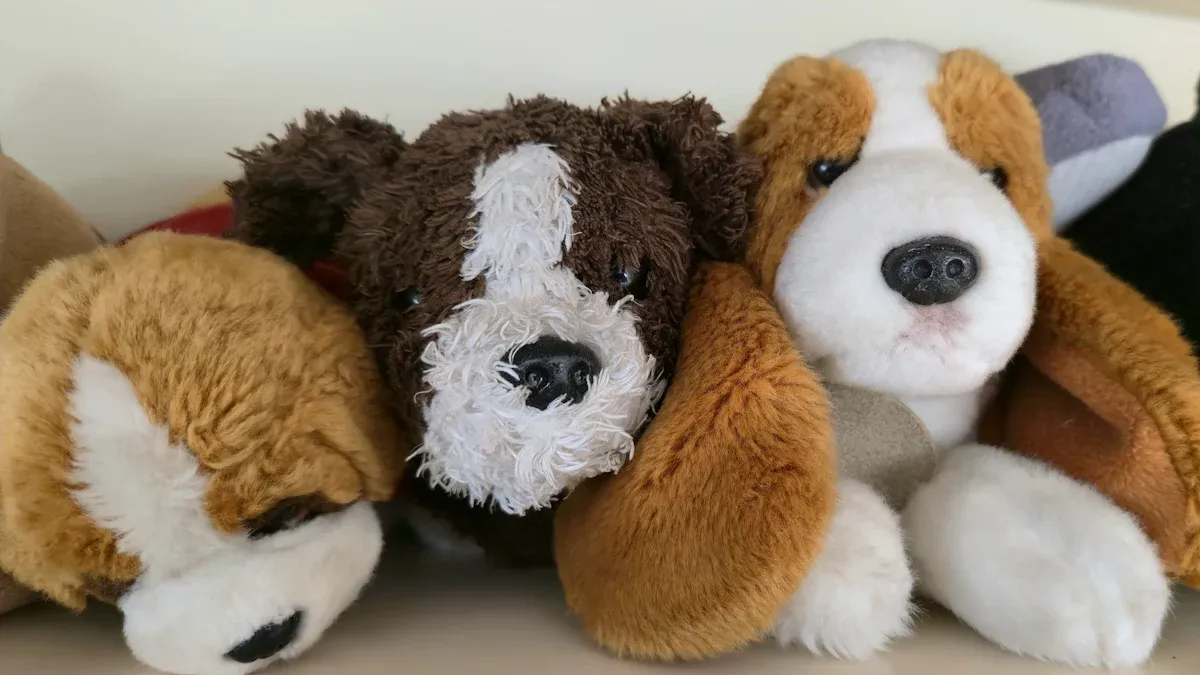
When I choose a custom plush dog toys manufacturer, I gain access to a wide range of customization options. I can select from soft fabrics like crystal velvet or Minky for a cuddly feel, or choose durable materials such as canvas for tough play. I also have the freedom to adjust design features, like fill density or adding crinkle material for extra engagement. The table below shows some typical customization aspects:
Customization Aspect | Description |
|---|---|
Soft fabrics for comfort or durable materials for play. | |
Design Features | Fill density and crinkle material for engagement. |
Safety Considerations | Hypoallergenic fillings for pet safety. |
This flexibility allows me to create toys that match my vision and meet the needs of different pets.
Quality and Safety
I always look for high standards when working with a custom plush dog toys manufacturer. Many manufacturers follow strict quality control standards, such as EN71 and ASTM F963. These standards require rigorous testing to ensure each toy is safe and reliable. I know that premium materials may increase costs, but they also improve the final product. Efficient packaging and careful logistics protect the toys during shipping and help them arrive in perfect condition.
Branding Potential
Custom plush dog toys offer strong branding opportunities. I have seen pet businesses use these toys to showcase their logos or unique designs. Law enforcement agencies sometimes use custom plush toys to create a friendly image and connect with the community. Personalized toys also appeal to specific breeds and personalities, which helps build customer loyalty and emotional connections.
Understanding the 50-Piece OEM Order
MOQ and Flexibility
When I reach out to a custom plush dog toys manufacturer, I always ask about their minimum order quantity, or MOQ. I have learned that the standard MOQ for plush toys usually sits around 500 pieces per design. Some manufacturers set different MOQs based on the type and complexity of the product. I often find that:
Some factories start with MOQs as low as 300 units, while others require 1,000 or more.
Smaller orders, like a 50-piece batch, often come with a higher unit cost.
Manufacturers sometimes show flexibility, especially if I negotiate upfront.
I can get better terms if I clarify my needs early in the conversation.
Testing market demand with a smaller run makes sense, so I always ask if the manufacturer can accommodate a lower volume.
I notice that flexibility varies, so I recommend discussing MOQ options before finalizing any order.
OEM vs ODM Services
When I work with a custom plush dog toys manufacturer, I choose between OEM and ODM services. The table below shows the main differences:
Service Type | Description |
|---|---|
OEM (Original Equipment Manufacturer) | I provide a complete, production-ready design, and the factory manufactures it to my exact specifications. |
ODM (Original Design Manufacturer) | I share a concept or idea, and the factory’s design and engineering team helps develop it into a finished product. |
I find that OEM works best when I have a clear design, while ODM is ideal if I need help turning my idea into reality.
OEM Order Steps
Inquiry & Design Submission
I always start my OEM order by reaching out to the custom plush dog toys manufacturer with my ideas. I know that clear communication at this stage sets the tone for the entire process. I prepare my design, color preferences, and branding details before I contact the factory. I often use a mood board or a product photo to show my vision. Some manufacturers let me choose from their existing catalog if I do not have a finished design.
Here is what I usually need to provide during the initial inquiry:
Requirement Type | Details |
|---|---|
Design & Color | Custom shapes, sizes, Pantone color matching, seasonal or branded themes |
Your Logo | Embroidery, molded logos, printed tags, or heat-transfer prints |
Packaging | Standard OPP bags, custom hangtags, eco-friendly boxes, retail-ready sets |
Initial Submission | Design files, product photos, or mood boards; option to select from catalog |
Digital Mockup & Quote | Mockup with colors, dimensions, materials; full quote based on order volume |
Sampling & Testing | Sample production for approval; safety and branding accuracy testing |
Bulk Production | Mass production after sample approval; minimum order quantity and unit price range |
Shipping Options | Stock or custom packaging; various shipping methods |
I find that some manufacturers offer no minimum order quantity, but most set 50 pieces as a common starting point for custom orders. I always ask about flexibility if I want to test the market with a small batch.
Quotation & Sample Creation
After I submit my design, the manufacturer sends me a detailed quotation. This quote includes the cost per unit, sample fees, and estimated shipping charges. I review the digital mockup to check colors, dimensions, and materials. If I need changes, I request them before sample production begins.
Sample creation usually takes two to four weeks. I receive a physical sample for approval. I check the toy for color accuracy, logo placement, and overall quality. I know that approving the sample is important because the factory will use it as the standard for bulk production.
Tip: I always keep communication open during this stage. Quick feedback helps avoid delays and ensures the sample matches my expectations.
Order Confirmation & Payment
Once I approve the sample, I confirm the order and arrange payment. Most custom plush dog toys manufacturers accept several payment methods:
Paypal
Western Union
Bank transfer
I choose the method that works best for me. I make sure to review the invoice and confirm all order details before sending payment. This step locks in my production slot and timeline.
Production & Quality Checks
Production begins after payment. The typical timeline for bulk production ranges from 24 to 28 weeks, depending on order size and complexity. I stay in touch with the manufacturer to track progress and address any questions.
Quality control is a key part of the process. The factory performs several checks to ensure each toy meets safety and durability standards. These include:
Compliance with safety standards
Durability evaluations
Structural inspections
Seam strength inspection
Pull-force testing
Stuffing retention checking
Squeaker retention inspection
Fabric abrasion evaluation
Needle detection
Final structural inspection
I ask for updates and, if possible, request photos or videos of the quality checks. This gives me confidence that the toys will be safe and reliable.
Packaging & Delivery
When production finishes, the manufacturer prepares the toys for shipping. I can choose from several packaging options based on my needs:
Gift packaging, such as rigid boxes or printed gift bags, adds value for special occasions.
Retail and supermarket displays use blister packs, clamshell packaging, or hang tags for better visibility.
E-commerce sales benefit from custom mailer boxes, polybags, and protective materials to ensure safe delivery.
Subscription boxes and bundled sets use custom-printed boxes and branded fillers for a memorable unboxing experience.
I know that custom packaging may add to the delivery time, so I plan ahead if I want special options. The manufacturer arranges shipping, and I receive tracking information once the toys leave the factory.
Note: I always communicate clearly at each stage. This helps avoid misunderstandings and keeps the process smooth from start to finish.
Choosing the Right Manufacturer
Evaluating Suppliers
When I start looking for a custom plush dog toys manufacturer, I focus on several key factors. I want to make sure the supplier can deliver safe, high-quality products and support my needs throughout the process. Here are the main points I check:
Certifications like ISO9001, BSCI, WCA, CE, and FDA compliance show that the factory meets international standards.
I ask about material quality. I prefer non-toxic, eco-friendly, and durable fabrics for my toys.
I look for in-house design teams. These teams help with sketches, patterns, and prototypes.
Production capacity matters. I check if the supplier can handle my order volume, even if I start with a small batch.
Clear communication is important. I want suppliers who offer timelines, sampling, and revisions.
I also compare safety tests, production capabilities, and customer support. I read reviews and research top manufacturers to find reliable partners. I always ask for references or samples before making a final decision.
Comparing Turnaround Times
Turnaround time can make a big difference in my project. I compare how long each manufacturer takes from sample to delivery. Some factories move faster than others. I use the table below to see how leading companies perform:
Manufacturer | Turnaround Time |
|---|---|
PrideBites | 6-8 weeks |
Plushtoysmfg | 90-100 days |
Promo Bears | 18-20 weeks |
I break down the process further. For example, Plushtoysmfg usually spends 3-5 days on sample-making, 30-35 days on production, and 35-40 days on shipping. Promo Bears takes 4-5 weeks for prototype development, 8-9 weeks for mass production, and 6 weeks for shipping. I choose a supplier whose timeline matches my needs.
Tip: I always ask for a detailed schedule before I place my order. This helps me plan my launch and avoid delays.
Ensuring Durability and Safety
Safety and durability are top priorities for me. I want every toy to pass strict tests before reaching customers. I check if the manufacturer performs mechanical and physical safety tests. These tests look for choking hazards and test how well the toy holds up during play.
I also review quality control steps. I ask about regular inspections for stitching, material strength, and craftsmanship. I make sure the toys are free from hazardous substances and have compliance certificates from accredited labs.
Here is a table of common safety standards and what they cover:
Safety Standard | Description |
|---|---|
Chemical Compliance | Checks for safe materials, including REACH and California Proposition 65. |
Mechanical and Physical | Tests for choking hazards, weight limits, and durability. |
Durability Evaluations | Looks at seam strength, bite resistance, and overall toughness. |
I also pay attention to labeling. I want clear safety information, age ranges, and care instructions on every toy.
For durability, I ask about the materials used. Tough rubber, nylon, and reinforced fabric last longer and resist damage. I prefer lightweight, mold-resistant, and hypoallergenic materials. These features help the toys stay safe and look good over time.
I always choose a supplier who values safety and durability as much as I do. This protects pets and builds trust with my customers.
Tips for a Smooth OEM Experience
Communication Best Practices
I always focus on clear communication with my manufacturer. I use visual annotations and reference images during sample revisions. Annotated photos help highlight features needing adjustment. Reference images clarify design intentions, such as facial expressions or fabric textures. Structured feedback makes changes accurate and avoids confusion. I check each stage carefully. The table below shows what I review and why it matters:
Stage | What I Check | Why It Matters for Dog Toy Brands |
|---|---|---|
Material Incoming Check | Material batch, color direction, hardness, fabric quality, stuffing, documents | Maintains toy feel and compliance from the start |
Pre-Production Confirmation | Approved sample, logo position, surface texture, dimensions, packaging layout | Reduces mismatch between sample and production output |
In-Process Inspection | Appearance, stitching, embroidery, filling, surface finish | Catches process drift early |
Functional Review | Bounce, squeeze feel, squeaker placement, treat path, bite-zone structure | Ensures toys work as intended |
Final Inspection | Packing, carton marks, quantity, labels, shipment readiness | Improves receiving quality for sellers and warehouses |
Avoiding Common Pitfalls
I learned to avoid mistakes that can delay my order or hurt quality. Here are the most common pitfalls:
Changing design after production starts
Ignoring safety testing requirements
Choosing supplier based only on lowest price
Skipping physical sample approval
Underestimating shipping time
I always stick to my approved design and check safety standards. I never skip sample approval. I plan for shipping time and choose suppliers with proven quality.
Quality Assurance
I check every toy against my approved sample. I verify size, weight, and color. I inspect shape and symmetry. I make sure the surface is clean and stitches are tight. I check seam strength and confirm all parts are secure. The table below shows my quality checks:
Quality Check | Description |
|---|---|
Pattern dimensions | Match tech pack specifications |
Color assignment | Verified for each pattern piece |
Embroidery placement | Confirmed against golden sample |
Filling weight | Confirmed per body section |
Face embroidery | Symmetry, position, thread colors |
Fabric surface | No stains or pulled threads |
Seams | All seams closed, no loose threads |
Safety elements | All parts secure, no sharp edges |
Branding | Logo position and label accuracy |
Odor check | No chemical or manufacturing odor |
Packaging | Format and safety labels verified |
I always make sure my toys meet these checks before shipping.
I find the 50-piece OEM order process simple and accessible. To succeed, I define my requirements, evaluate suppliers, and check quality assurance. Customization lets me create unique plush dog toys. Reliable manufacturers and thorough testing ensure safety and satisfaction. I encourage first-time buyers to start their custom order today.
FAQ
How long does sample creation take?
I usually receive my sample in two to four weeks. The timeline depends on the complexity of my design and the manufacturer’s schedule.
Can I customize packaging for my plush dog toys?
I always ask for custom packaging. Manufacturers offer options like gift boxes, hang tags, or eco-friendly bags. Custom packaging helps my brand stand out.
What safety standards should my toys meet?
I check for EN71 and ASTM F963 compliance. These standards ensure my plush dog toys are safe for pets and meet international requirements.
