


I love making my own dog toys. The right dog rope knot types make all the difference. I always pick knots that give strength, safety, and chew-resistance. These knots hold up to tugging and chewing. I want you to feel confident tying each one for your pup!
Key Takeaways
Choose strong knots like the Sail Knot and Constrictor Knot for durable dog toys. These knots hold tight during play and prevent unraveling.
Always prioritize safety by using non-toxic materials and regularly checking toys for wear. This keeps your dog safe and happy.
Maintain your dog’s toys by cleaning them every two weeks. Regular care extends the life of the toys and ensures a healthy playtime.
What Makes a Good Dog Rope Knot?
Strength and Durability
When I make toys for my dog, I always look for knots that can handle rough play. Some knots just hold up better than others. I checked out some lab tests on different ropes and knots. Here’s a quick look at how they compare:
Product | Breaking Strength (kg) | Price (¥) | Safety Certification |
|---|---|---|---|
Brand A’s Cotton Rope | < 15 | 29 | Not specified |
Brand B’s Plastic Chew Rope | < 15 | 45 | Previously reported to contain phthalates |
Brand C’s Nylon Rope | < 15 | 58 | Not specified |
Brand D’s Knotted Rope Ball | 30 | 68 | FDA-grade non-toxic certified |
I always choose knots and ropes that can handle more weight. The Brand D knotted rope ball stands out because it has a breaking strength of 30 kg. That means it can take a lot of pulling and chewing. When I pick dog rope knot types, I want them to last through many play sessions.
Safety for Dogs
Safety comes first for me. I never want my dog to choke or get hurt. I look for toys made from safe, non-toxic materials. Here are some things I always check:
Chew toys made from tough rubber or nylon for strong chewers.
Rope toys made from safe, non-toxic fibers. These are great for tug and also help clean teeth.
Balls that are sturdy and the right size for my dog’s mouth.
I avoid anything that could break into small pieces. I also make sure the knots are tight and secure. That way, my dog stays safe while having fun.
Essential Materials and Safety Tips
Best Rope Types for Dog Toys
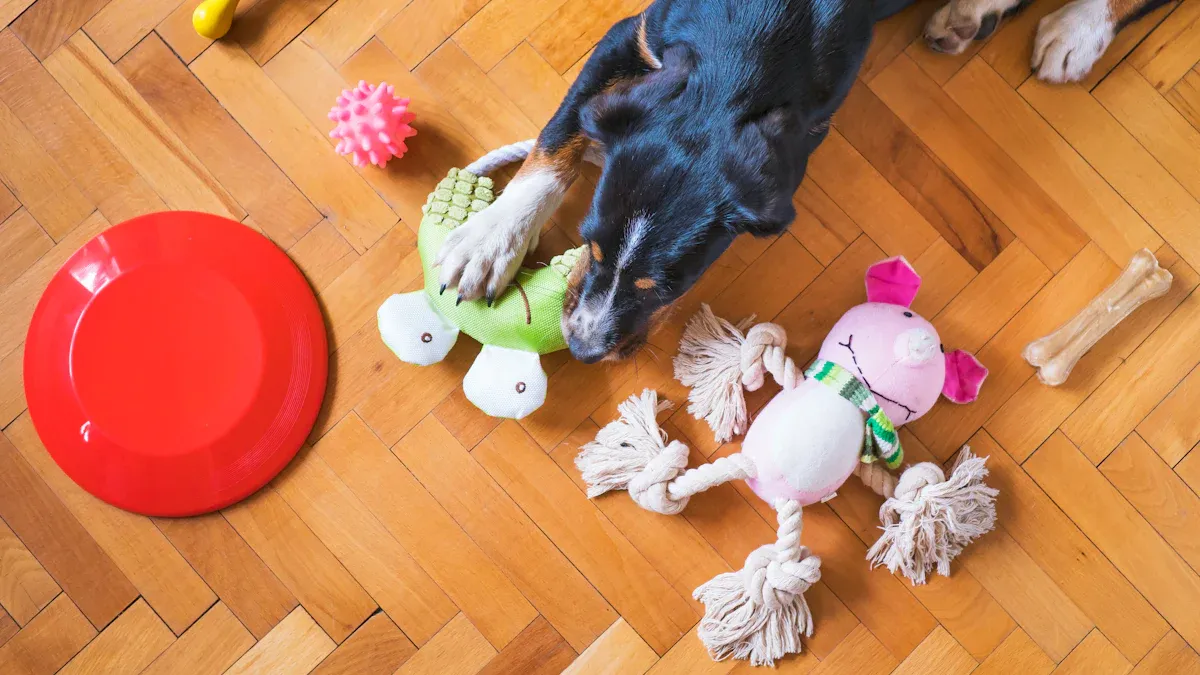
I always start with the right rope before I even think about tying any dog rope knot types. Not all ropes are created equal. Some fray or break after just a few play sessions. Others last much longer and keep my dog happy and safe. Here are some of my favorites:
Dri-Tech Rope stands out because it lasts through endless games of fetch. It even has a scent that keeps my dog interested and playing longer. The moisture-resistant fibers help it stay clean and strong.
The Rocket & Rex Rope Dog Toy Set uses thick, tightly woven cotton fibers. I like this because it resists fraying and breaking. It also doesn’t splinter like plastic, so I don’t worry about choking hazards. Many pet owners say these toys last longer than most.
Playology Dri-Tech Rope combines durability with an all-natural scent. My dog loves it, and I love that it stays clean thanks to its moisture-resistant material.
I always look for ropes that are tightly woven and made from safe materials. This makes a big difference in how long the toy lasts.
Safety Guidelines
I never skip safety when making toys for my dog. I follow these simple rules to keep playtime fun and worry-free:
Safety Guideline | Description |
|---|---|
Avoid toxic materials | Use pet-safe fabrics and plastics. |
Supervise playtime | Especially important with toys made from bottles or cardboard. |
Check regularly | Discard worn-out or frayed toys to prevent choking hazards. |
Size matters | Ensure the toy is appropriate for your pet’s breed and age. |
Tip: I always check my dog’s toys every week. If I see any fraying or loose knots, I toss the toy and make a new one. Safety comes first!
Best Dog Rope Knot Types and How to Tie Them
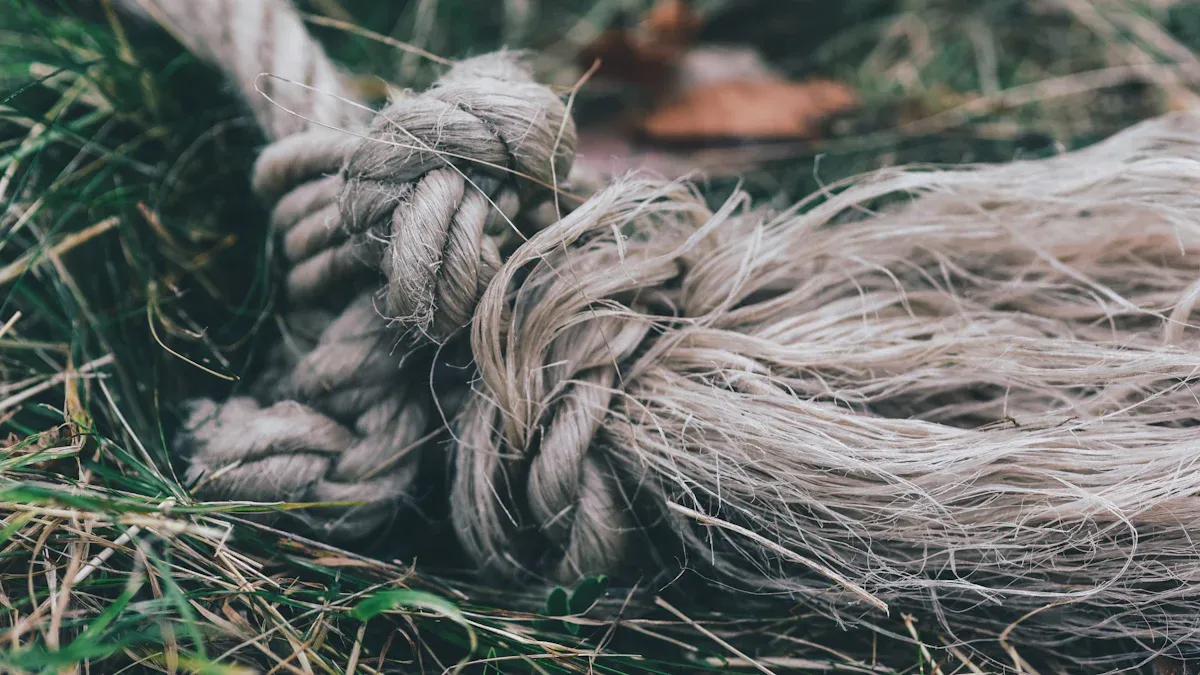
When I make my own dog toys, I always reach for the most reliable dog rope knot types. Each knot has its own strengths. Some are perfect for tugging, others for chewing, and a few are just fun to tie. Let me walk you through my favorite knots, how to tie them, and why they work so well for durable dog toys.
Sail Knot
The Sail Knot is a classic. I like it because it holds tight under tension and is easy to untie if I need to adjust the toy. This knot works well for joining two pieces of rope or creating a sturdy loop.
How I tie a Sail Knot:
Lay two ropes side by side.
Cross the end of one rope over and under the other.
Repeat with the second rope, crossing over and under the first.
Pull both ends to tighten.
Why I use it:
The Sail Knot gives me a strong, flat connection. It doesn’t slip easily, which means my dog’s toy stays together during rough play.
Constrictor Knot
The Constrictor Knot is one of the toughest knots I know. It grips the rope so tightly that it almost never comes undone. I use this knot when I want to lock down the ends of a toy or add extra security.
How I tie a Constrictor Knot:
Pass the rope around the object or bundle.
Cross the working end over the standing end and toward the object.
Pass it over the object again.
Pass it over the standing line.
Pass it under the first riding turn and the standing line.
Pull both ends to tighten the knot.
Tip: The Constrictor Knot is perfect for securing the ends of a tug toy. It holds up even when my dog pulls with all his strength.
Square Knot
The Square Knot is simple but powerful. I use it to join two ends of rope together. It’s easy to tie and untie, but it holds firm during play.
How I tie a Square Knot:
Start with four strips of material (I like using different colors to keep track).
Tie a big knot at one end to anchor the strips.
Lay out the strips with two to the sides and two pointing down.
Fold the left strip over the two center strips.
Fold the right strip up over both horizontal strips.
Fold the rightmost strip over the strip you just folded up, and pull it under the second straight strip.
Pull all four strips tight to form the knot.
Repeat the process, alternating sides, until you reach the end.
Tie off the end with a big knot.
“The square knot securely fastens the ends of the DIY dog rope toy together, minimizing the chances of the toy unravelling.”
2 Strand Celtic Button Knot
The 2 Strand Celtic Button Knot adds a decorative touch and a chunky grip for your dog. I like to use it at the ends of toys for a fun, chewable knob.
How I tie a 2 Strand Celtic Button Knot:
Take two strands and lay them parallel.
Form a loop with one strand.
Weave the second strand over and under the first, following the pattern.
Tighten the knot by pulling both ends evenly.
Why I use it:
This knot creates a thick, round button that’s hard for dogs to destroy. It also looks great!
Matthew Walker Knot
The Matthew Walker Knot is a favorite for durability. It uses interlocking overhand knots to keep everything tight and secure.
How I tie a Matthew Walker Knot:
Prepare the rope by cutting it to length and unraveling about 8 inches into three strands. Tape the ends to prevent fraying.
Take the first strand, wrap it around the main rope, and pass its end up through the loop.
Wrap the second strand around the main rope, passing it through its own loop and the first strand’s loop.
Repeat with the third strand, passing it through the loops of the first and second strands.
Tighten the knot by gently pulling each strand, starting with the last and working backward.
Trim the excess and fray the ends for a finished look.
Repeat on the other end if needed.
The Matthew Walker Knot consists of interlocking overhand knots that secure the strands tightly together.
This knotting method enhances the robustness of the toy, reducing the likelihood of fraying or breaking.
The design allows the toy to endure the tugging and chewing from dogs, thus extending its lifespan.
Figure Eight Loop
The Figure Eight Loop is one of the safest dog rope knot types I use. It forms a strong loop that resists slipping and unraveling.
How I tie a Figure Eight Loop:
Make a loop with your rope, leaving extra rope to work with.
Wrap the working end around the bottom of the loop.
Bring the working end over the pinched section, wrap it behind, and end with it in front of the loop.
Insert the working end into the loop and pull.
Tighten the knot evenly by hand.
Advantage | Description |
|---|---|
Prevents unraveling | The design keeps the rope tightly together, reducing the risk of the toy falling apart. |
Reduces choking hazards | No loose ends are present, minimizing the risk of pets choking or ingesting rope strands. |
Enhances durability | The thick and durable rope material makes it harder for pets to destroy the toy, extending its lifespan. |
Double Overhand Knot
The Double Overhand Knot is simple but adds bulk and grip to any toy. I use it to create stoppers or chunky ends that my dog loves to chew.
How I tie a Double Overhand Knot:
Make a loop at the end of the rope.
Pass the working end through the loop twice.
Pull both ends to tighten.
Why I use it:
This knot is quick to tie and adds extra thickness, making it harder for my dog to unravel the toy.
Monkey Fist Knot
The Monkey Fist Knot is a superstar among dog rope knot types. It creates a heavy, chewable ball that’s perfect for fetch and tug.
How I tie a Monkey Fist Knot:
Tape both ends of the rope to stop fraying. Leave a tail if you want a handle.
Hold your hand in a “C” shape and wrap the rope vertically around your fingers three times.
Rotate the bundle and wrap three horizontal turns around the vertical wraps.
Find the opening running front to back and feed the working end through it three times.
Tighten the knot by pulling each segment in sequence.
Add a handle if you want—leave a tail, tie a stopper, or make a loop.
Roll the knot in your palms to seat the wraps and check for evenness.
The tightly woven structure of the Monkey Fist Knot adds weight and durability, making it ideal for energetic play.
The design supports healthy chewing and dental care by helping to floss teeth and massage gums.
Note: The Monkey Fist Knot takes a little practice, but the result is worth it. My dog goes wild for these toys!
I love experimenting with different dog rope knot types. Each one brings something special to my homemade toys. With these step-by-step guides, you can make safe, strong, and fun toys for your furry friend.
Tips for Long-Lasting Dog Rope Toys
Maintenance and Cleaning
I always want my dog’s toys to last as long as possible. Regular care makes a big difference. Here’s what I do to keep rope toys in top shape:
I check each toy for wear and tear every week. If I spot any damage, I set the toy aside for a closer look.
I clean my dog’s rope toys at least once every two weeks. If my dog plays outside or shares toys with other pups, I wash them more often.
I use mild dish soap, a splash of vinegar, and warm water. I soak the toys for about 15 minutes. This helps loosen dirt and gets rid of germs.
After soaking, I scrub the toys gently. I rinse them well and let them air dry completely before giving them back to my dog.
I always look for dirt, stains, or strange smells. If a toy smells bad even after cleaning, I know it’s time to toss it.
Tip: Clean toys help keep your dog healthy and make playtime more fun!
When to Replace
Sometimes, even the toughest rope toy needs to retire. I watch for these signs to know when it’s time for a new one:
I see frayed or loose strings. These can be dangerous if swallowed.
The toy has exposed stuffing or filling. That’s a choking risk.
There’s mold or a smell that won’t go away. That means harmful stuff could be growing inside.
The toy is missing a squeaker or rattle. My dog might swallow the missing piece.
The toy has gotten so small that it could be a choking hazard.
I never take chances with my dog’s safety. When in doubt, I replace the toy. A fresh, sturdy rope toy always brings a wagging tail!
I love making strong dog toys with knots like the Monkey Fist and Figure Eight Loop. These knots last and keep my dog safe.
I use old t-shirts or jeans for toys. This saves money and helps the planet.
Try making your own! Your dog will thank you.
FAQ
How do I pick the best rope for my dog toy?
I look for thick, tightly woven cotton or nylon. I avoid ropes that fray easily. My dog’s safety comes first.
Can I wash homemade rope toys in the washing machine?
Yes, I toss them in a mesh bag. I use mild detergent. I always let them air dry before giving them back to my dog.
What should I do if my dog chews through a knot?
I take the toy away right away. I check for loose threads. I make a new toy if needed. Safety matters most!
