


Buyers must inspect design, materials, construction, safety, and compliance during plush dog toy sample approval. Thorough inspection prevents quality defect issues and supports a strong quality control process. The sample process catches discrepancies in custom plush prototype development, ensuring plush production matches the intended design. Neglecting sampling process steps can lead to poor quality, regulatory fines, and customer complaints. Manufacturer reviews of ip character plush toys require samples to meet safety standards. Common causes of dissatisfaction include lengthy registration times, stringent testing, and risk of violations.
Proper approval protects businesses from costly errors and maintains product quality.
Common Areas Reviewed | Description |
|---|---|
Seam strength and stuffing retention | Ensures durability and safety during use. |
Small component attachment | Prevents choking hazards for pets. |
Surface materials and coatings | Ensures non-toxic and safe materials are used. |
Accessible internal components | Prevents potential hazards from loose parts. |
Age-related safety considerations | Ensures toys are suitable for the intended age. |
Key Takeaways
Inspect design, materials, and safety features before production to ensure plush dog toys meet quality standards.
Conduct thorough checks on stitching, seams, and components to prevent defects and ensure durability during play.
Request third-party test reports for safety compliance to protect pets and maintain brand trust.
Design Review for Custom Plush Toy
A thorough design review forms the foundation of plush dog toy sample approval. Buyers and a custom dog toy manufacturer must examine every detail in the tech pack and design documents before moving to production. This process ensures the custom plush toy matches the intended vision and meets all quality expectations.
Verify Design Drawings and Specs
A custom plush toy starts with clear design drawings and specifications. The manufacturer should provide high-resolution files, such as AI, PNG, or PDF, to show every angle and detail. Buyers need to check the following:
Product type: mascot, mini plush, gift plush, or custom stuffed animals
Artwork: original sketches, logos, or reference images
Must-keep features: face, silhouette, color, pose, and fabric area
Size: target height and width
Materials: fabric type, hand-feel, and direction
Packaging: polybag, hang tag, or box
Target market and timing
A checklist helps confirm that the custom plush toy will serve its intended use and market. The table below highlights key elements to review:
Element to Review | Description | Purpose |
|---|---|---|
Embroidery Placement | Facial features positioned correctly | Preserve character expression |
Stitch Quality | Neat and consistent stitching | Professional appearance |
Printing Clarity | Sharpness of printed patterns | Maintain visual quality |
Structural Stability | Balance and secure construction | Ensure product quality |
Confirm Product Identity and Documentation
A custom dog toy manufacturer must provide proof of compliance and identity for each custom plush toy. Buyers should request documentation for safety standards and certifications. The table below lists important certifications:
Safety Standard | Description |
|---|---|
CE Certification | Compliance with EU safety regulations for plush toys |
EN71 | European standard for mechanical, flammability, and chemical safety |
ASTM F963 | US standard for materials, construction, and testing of toys |
CPSIA Compliance | US regulation for limits on harmful substances in children’s products |
REACH | EU regulation for chemical safety in products |
A design review at this stage prevents costly errors during production and supports a smooth plush dog toy sample approval process.
Plush Dog Toy Sample Approval: Visual and Workmanship Inspection
Compare Sample to Approved Design
A custom plush toy must match the approved design in every detail. The inspection team compares the sample to the original drawings and specifications. They check for accuracy in color, shape, and features. Each plush should display clean stuffing and strong seams. The team inspects the squeaker pocket and tests the toy’s ability to recover after compression. They review bite-accessible components and simulate shake and tug play to assess durability. Filling distribution and odor after packaging also receive attention. Metal detection ensures no fragments remain inside. Random finished goods inspection takes place before shipping.
Description | |
|---|---|
Stuffing Cleanliness | Visual check for cleanliness of stuffing |
Seam Pull Checks | Testing seams on ears, tails, limbs, and labels |
Squeaker Pocket Inspection | Ensuring the integrity of the squeaker pocket |
Compression and Recovery Check | Assessing the toy’s ability to return to shape |
Bite-accessible Component Review | Checking components that can be bitten |
Shake and Tug Simulation | Testing durability through simulated play |
Filling Distribution Check | Ensuring even distribution of filling |
Odor Check After Packaging | Checking for any unpleasant odors |
Metal Detection | Ensuring no metal fragments are present |
Random Finished Goods Inspection | Conducting checks before shipping |
Tip: Consistent inspection helps maintain quality and prevents defects in custom plush toy production.
Check Size, Proportions, and Shape
A manufacturer sets clear quality standards for every custom plush toy. They use technical specifications to define materials, tolerances, and finishing details. Pre-production sampling and prototype approval allow the team to evaluate design fidelity and manufacturability. During prototype reviews, inspectors perform visual checks for color matching. They measure finished dimensions and test seam strength. These steps ensure the plush meets the intended design and maintains the correct proportions. Accurate samples support smooth plush dog toy sample approval and reliable production.
Manufacturers establish quality standards and technical specifications for custom plush toys.
Pre-production sampling and prototype approval confirm design fidelity.
Prototype reviews include visual inspection, measuring dimensions, and testing seam strength.
A custom plush toy must meet all requirements for size, shape, and design. Consistent inspection protects quality and supports successful production.
Material and Fabric Inspection for Plush Toys
Identify Fabric Types and Quality
A custom plush toy must use the right materials to ensure safety and comfort. During inspection, the team checks the fabric for softness, durability, and ease of cleaning. These features help the plush maintain its shape and texture after repeated use. The manufacturer selects hypoallergenic and non-toxic materials to protect pets. Many buyers now prefer sustainable options for their custom plush toys. Inspectors also look at pile length and thickness, which affect the toy’s fluffiness and how easy it is to sew.
Softness creates a snuggly feel for the custom plush toy.
Durability keeps the plush in good condition after play.
Pile length and thickness influence the design and production process.
Safety and sustainability matter for both pets and the environment.
Common material defects can affect production quality and customer satisfaction. The table below highlights issues often found during inspection:
Defect Type | Description |
|---|---|
Strong Rubber Odor | Excessive odor can affect customer acceptance, especially since dogs interact with toys using their mouth and nose. |
Wrong Hardness Selection | Incorrect hardness can lead to toys that are either too soft or too hard for safe use. |
Poor Tear Resistance | Toys may not withstand chewing, leading to quick damage and potential safety hazards. |
Uneven Color or Color Difference | Variations in color can affect the aesthetic appeal and perceived quality of the toy. |
Confirm Color Accuracy and Material Safety
Color accuracy is important for every custom plush toy. Inspectors compare the sample to the approved design to check for even color and no fading. They test color fastness to make sure the plush will not bleed or fade during use or cleaning. Material safety is also a top priority. Third-party labs test the materials to confirm they are free from harmful chemicals. The table below shows key standards for custom plush toys:
Aspect | Description |
|---|---|
Chemical Safety | Third-party testing is essential to ensure that materials used are free from harmful chemicals. |
Fabric Safety | Testing ensures that the fabric used in plush toys is safe for pets and does not pose any risks. |
Color Fastness | This testing confirms that the colors used in the toys do not bleed or fade, ensuring color accuracy. |
Seam Performance | Evaluates the durability of seams to prevent any potential hazards from loose parts. |
Tip: A thorough inspection of materials and color helps maintain high quality and supports a successful custom plush toy production.
Embroidery, Printing, and Stitching Approval
Inspect Embroidery Details
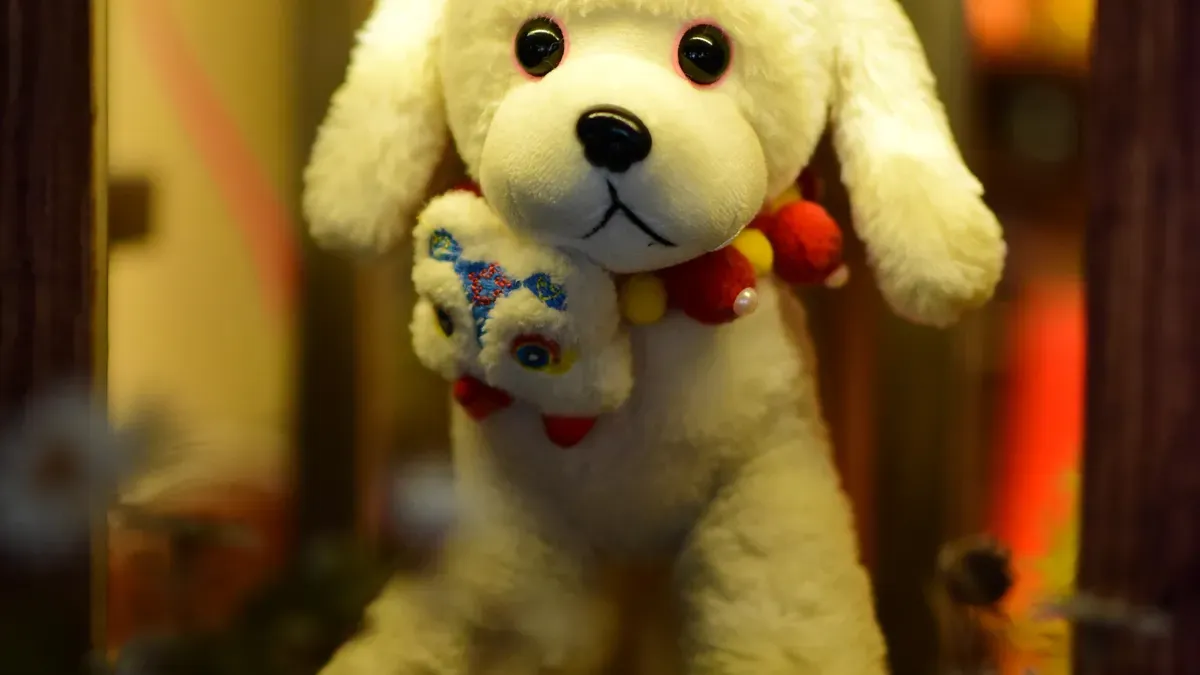
Embroidery adds character and detail to every custom plush dog toy. During approval, the team checks embroidery patterns for clarity and completeness. They look for even and tight stitches that hold up during play. Colors must match the original design, and there should be no skipped stitches or loose threads. Any color discrepancies can affect the overall appearance and reduce the toy’s appeal. A careful inspection ensures the custom plush meets both safety and visual standards.
Embroidery patterns must appear clear and complete.
Stitches should be even and tight.
Colors need to match the approved design.
Inspect for skipped stitches or loose threads.
Avoid any color discrepancies.
Tip: High-quality embroidery helps the custom plush stand out and supports long-lasting use.
Evaluate Printing Quality
Printing on custom plush toys requires close attention to detail. The manufacturer follows several stages to maintain quality throughout production. Each stage focuses on different aspects of the plush, from pattern accuracy to final appearance. The table below outlines the main inspection points:
Inspection Stage | Description |
|---|---|
Post-Cutting Inspection | Checks pattern pieces for dimensional accuracy. |
Post-Embroidery Inspection | Reviews embroidered components for clarity, neatness, and thread security. |
In-Line Sewing Inspection | Inspects shells for seam strength, alignment, and overall construction quality. |
Final Inspection | Conducts a final review for shape, cleanliness, and symmetry, ensuring all prints meet standards. |
Consistent inspection at each stage helps maintain the quality of every custom plush toy before large-scale production.
Check Stitching and Seams
Strong stitching and secure seams are essential for custom plush dog toys. The team checks for construction techniques that improve durability. Double stitching increases toughness, while multi-layered nylon adds strength. Reinforced X-stitching helps prevent seam rips during rough play. The table below shows common techniques and their benefits:
Construction Technique | Benefit |
|---|---|
Double Stitching | Increases toughness |
Multi-layered Nylon | Adds strength |
Reinforced X-stitching | Prevents seam rips |
Inspectors also request results from bite tests, drop tests, and seam strength tests. These tests confirm that the custom plush can withstand daily use and meet safety standards. Reliable stitching supports a smooth production process and reduces the risk of defects after approval.
Mechanical, Physical, and Flammability Safety Checks
Test for Mechanical Hazards
Mechanical hazards can threaten the safety of any plush dog toy. A manufacturer must check every sample for weak points before production. The inspection team looks for problems that could cause injuries or reduce the quality of the toy. They use hands-on testing to pull, twist, and squeeze the plush. This process helps reveal hidden risks in the materials or construction. Common failures often appear during these tests.
Common Failures |
|---|
Seam tearing |
Stuffing exposure |
Squeaker release |
Rope detachment |
Weak stress-point construction |
A custom plush must pass these checks to move forward in production. Third-party test reports confirm that the toy meets strict safety standards. These reports also show that the manufacturer uses safe materials and strong construction methods. Testing for mechanical hazards protects pets and builds trust with buyers.
Assess Flammability Compliance
Flammability testing is a key part of plush dog toy approval. Plush toys must not catch fire easily. The inspection team reviews third-party test reports to confirm that all materials meet legal requirements. Two main standards guide this process.
Standard | Description |
|---|---|
European standard for toy safety, including flammability requirements for plush toys. | |
ASTM F963 | U.S. standard that mandates safety specifications for toys, including flammability and chemical safety for plush products. |
Testing for flammability ensures that the plush will not pose a fire risk during use. The manufacturer must use safe materials and follow all rules before starting production. Meeting these standards shows a commitment to quality and safety.
Tip: Always request third-party test reports for every plush sample before approving production.
Chemical Safety and Non-Toxic Material Verification
Evaluate Chemical Safety
A plush dog toy must pass strict chemical safety checks before production. The inspection team reviews all test reports to confirm that the plush meets the latest regulations in the US and Europe. These rules protect pets from harmful substances and ensure the highest quality. The manufacturer sends samples to certified labs for testing. Labs check for heavy metals, phthalates, and other restricted chemicals. They also test for strong odors that may signal unsafe materials.
The table below shows important standards and what they focus on during testing:
Regulation/Standard | Key Focus Areas | Commonly Controlled Substances |
|---|---|---|
REACH Compliance | Chemical compliance for pet plush toys in Europe | SVHC substances, Heavy metals, Restricted azo dyes, Phthalates, Certain flame retardants |
California Proposition 65 | Substances linked to cancer risks and reproductive toxicity | Lead, Cadmium, Phthalates, Formaldehyde |
ASTM F963 Reference Testing | Structural and material evaluation for safety | Pull-force testing, Seam strength testing, Compression testing, Bite-accessible component testing |
EN71 Reference Testing | Chemical and physical safety evaluation in plush pet toys | EN71-1, EN71-2, EN71-3 (Mechanical & Physical Properties, Flammability, Migration of Certain Elements) |
Industry Durability Standards | Internal durability standards for pet plush toys | Seam strength, Bite resistance, Stuffing retention, Squeaker retention, Fabric abrasion resistance |
Pet-Safe Material Standards | Material selection for safety and durability | Non-toxic plush fabrics, Low-odor printing inks, Phthalate-controlled accessories, Reduced brittle plastic usage |
Tip: Regular testing helps prevent recalls and supports safe plush production.
Confirm Non-Toxic Materials
Non-toxic materials play a key role in plush dog toy safety. The inspection team checks that every custom plush uses only approved fabrics and accessories. They look for labels that show compliance with pet-safe material standards. The manufacturer must avoid using brittle plastics or inks with strong odors. Plush toys should pass all chemical and durability tests before mass production. This process ensures that pets can play safely and owners can trust the quality of each plush. Reliable inspection protects both the brand and the end user.
Labeling, Age Grading, and Packaging Approval
Verify Labeling and Age Grading
A manufacturer must ensure that every plush dog toy meets strict labeling and age grading requirements. In the United States, the Consumer Product Safety Improvement Act (CPSIA) and ASTM F963 standards set the rules for toy safety. CPSIA requires tracking labels, limits on chemical content, and third-party testing for toys intended for children under 14. The ASTM F963-23 standard, effective since April 2024, covers mechanical hazards and flammability. Toys designed for children under 3 years old face even tougher testing because of choking risks. Accurate age grading helps buyers and parents select safe products. Labels must display the correct age range, safety warnings, and manufacturer information.
Tip: Clear labeling and proper age grading protect both pets and children from potential hazards.
Labeling Requirement | Purpose |
|---|---|
Tracking Label | Identifies the source and batch |
Age Grading | Indicates suitable age group |
Safety Warnings | Alerts users to possible risks |
Manufacturer Information | Provides contact and compliance details |
Inspect Packaging Quality
Packaging plays a key role in maintaining plush toy quality during shipping and storage. The inspection team checks for sturdy materials, secure closures, and clear graphics. Custom plush toys often use polybags, hang tags, or boxes. Packaging must protect the toy from moisture, dust, and damage. Buyers look for packaging that displays product details and safety information. Well-designed packaging supports smooth production and builds trust with customers.
Sturdy packaging prevents damage.
Clear graphics help buyers identify the plush.
Proper closures keep the toy clean and safe.
Note: Reliable packaging ensures that every plush arrives in perfect condition.
Final Sample Approval and Consistency Checks
Confirm Bulk Size and Weight Match Sample
Final sample approval ensures that every plush produced matches the approved prototype in both size and weight. The manufacturer follows a detailed process to keep production quality consistent with the original samples. During the sample process, the team identifies each material by type, grade, and supplier code. They document these details in the tech pack for easy reference. Before production, the factory sources bulk materials only from qualified suppliers. Swatches from these suppliers undergo comparison under D65 lighting to confirm color and texture accuracy. The inspection team approves or rejects these swatches before any cutting begins. At the roll level, inspectors verify each batch against the approved specification to maintain consistency.
Process Step | What Occurs | Output | Timing |
|---|---|---|---|
Every material in the approved sample identified by type, grade, and supplier code | Complete material list with supplier references | At sample approval | |
Specification documentation | Material characteristics documented in measurable terms | Material specification table in tech pack | At sample approval |
Bulk material sourcing | Factory sources bulk production quantities from qualified suppliers | Proposed bulk materials with sourcing documentation | Before production |
Swatch comparison and approval | Bulk material swatches compared against approved reference under D65 | Before cutting | |
IQC roll-level verification | Each production roll verified against approved specification | IQC inspection report | Before cutting |
Review Functionality and Performance
The sampling process does not end with visual checks. Inspectors test the functionality and performance of each custom plush to ensure it meets all requirements. They check that squeakers, crinkle paper, or other interactive features work as intended. The team evaluates stuffing distribution, seam strength, and recovery after compression. Production-ready prototypes must pass these tests before moving to mass production. Testing confirms that the plush can withstand play and handling without losing shape or function. Final production confirmation depends on these results. Consistent inspection during prototype development helps prevent defects and supports high quality. The manufacturer uses these steps to guarantee that every plush meets the standards set during approval.
Note: Reliable final sample approval protects the brand and ensures customer satisfaction.
Plush dog toy sample approval relies on careful inspection at every stage. The table below highlights essential checkpoints:
Inspection Point | Description |
|---|---|
Measurements | Check against the approved sample. |
Workmanship | Inspect stitching, seams, embroidery, and attachment strength. |
Appearance | Evaluate color, face details, and cleanliness. |
Labels and Packing | Verify labels, tags, and packing against specifications. |
Clarify requirements early.
Review prototypes for accuracy.
Approve samples before production.
Thorough plush dog toy sample approval with multi-stage checks prevents errors and protects brand reputation.
FAQ
What should buyers do if a plush dog toy sample does not match the approved design?
They should communicate concerns to the manufacturer. Request adjustments or corrections before approving the sample for production.
How often should safety testing occur for plush dog toys?
They should schedule safety testing for every new design and after any material changes. Regular testing helps maintain compliance.
Why is color accuracy important in plush dog toy samples?
Color accuracy ensures the final product matches the brand’s expectations. Consistent colors improve customer satisfaction and trust.
